Ontario ALPR cameras show how Ford rejects automated enforcement for drivers and accepts it when retail property needs protection.
On May 25, 2026, Ontario’s latest law-and-order package put a new kind of camera on the highway. The province was weighing automated licence-plate recognition systems on major roads to identify vehicles linked to organized retail theft. The same government that attacked municipal speed cameras as a driver shakedown was now considering expanded vehicle surveillance for retail crime.
CityNews reported Monday that the proposal sat inside the Protecting Ontario’s Streets and Communities Act, 2026. The bill framed retail theft as a coordinated crime problem tied to store losses, staff intimidation, resale networks, and public disorder.
The proposal did not arrive alone. Ontario also planned a dedicated prosecution team for organized retail crime, with early investigative guidance for police and priority handling for serious cases. The province was not simply responding to theft. It was building enforcement infrastructure around retail circulation.
The contradiction was immediate. Automated enforcement was treated as predatory when it disciplined drivers in school zones and community safety areas. Automated enforcement became public safety when it protected retail property and expanded policing capacity. The camera was never the problem. The political question was who the camera served.
The highway camera proposal
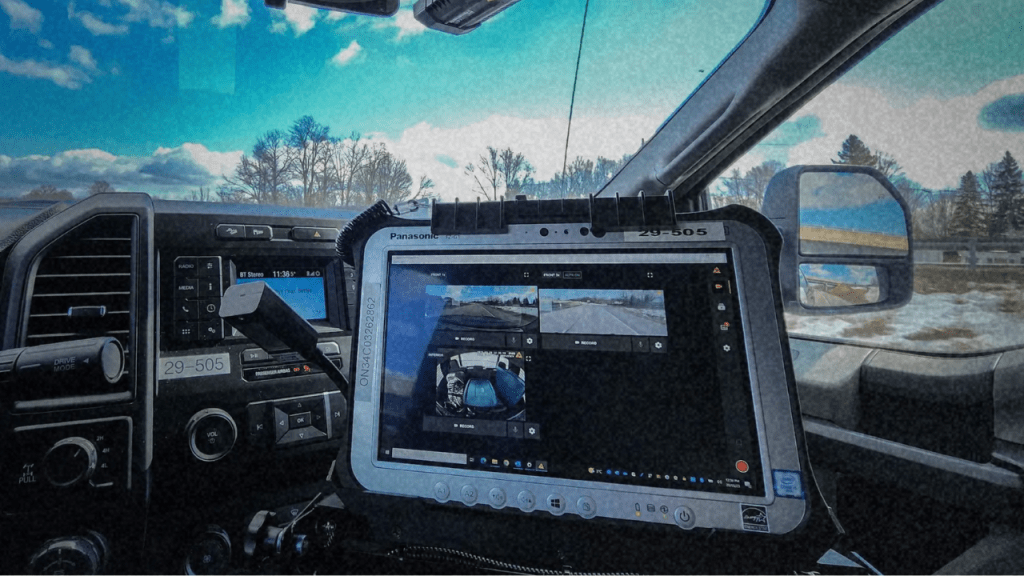
ALPR systems scan licence plates and compare them against databases. Police use them to identify stolen vehicles, suspended drivers, wanted vehicles, missing-person alerts, and other listed plates. The scan attaches a plate number to a vehicle image, date, time, and location. A driving route becomes a police data point.
Ontario’s highway proposal would move the technology further into fixed public infrastructure. CityNews reported that the province was assessing feasibility, cost, and privacy implications for adding ALPR infrastructure to the highway network. The stated purpose was organized retail theft, but the system itself is not limited by the crime category that justified installation.
Retail theft gave the proposal its political cover. Retail Council of Canada estimates, cited in the same reporting, put retail losses at $9.1 billion in 2024, up from $5 billion in 2018. Those numbers allowed the province to frame the camera network as a response to organized criminal movement through commercial space.
The highway matters because it turns circulation itself into the enforcement terrain. The state does not need to wait inside the store. It can monitor the roads that connect retail space, warehouses, resale markets, and municipal boundaries. Property protection becomes a mobility question.
Toronto already scans plates
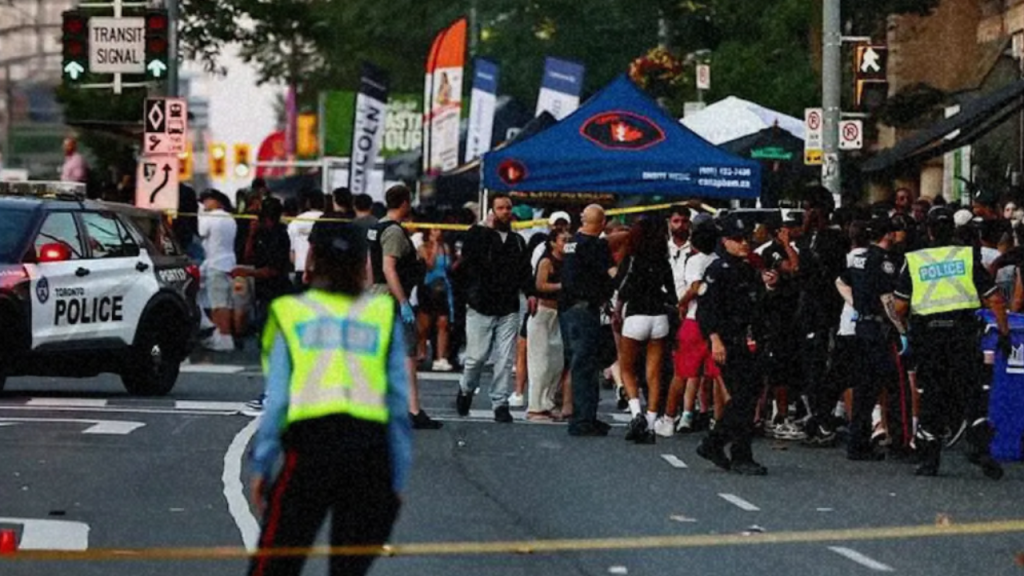
The highway proposal would expand a surveillance system already normalized in local policing. Toronto Police say ALPR is used in patrol vehicles to receive alerts, arrest wanted people, recover stolen vehicles, locate missing people, and investigate serious and violent crimes.
Toronto Police say ALPR records a vehicle image, plate text, date, time, and location. “Read” records, which do not match a hotlist or match inaccurately, are stored for seven days. “Hit” records are retained for 365 days unless converted into evidence.
The scale is not small. TPS says more than 560 vehicles have ALPR installed, producing more than 1.25 million scanned plates every day in Toronto alone. A system defended as targeted policing already processes the movements of large numbers of people who are not suspected of anything.
Toronto Police say the data is used only for law-enforcement purposes, restricted to authorized personnel, and governed by operational protocols. Those guardrails confirm the deeper point: mass scanning has become a normal administrative condition of ordinary driving.
Ottawa exposed the ALPR problem
The old ALPR problem starts with October 22, 2014. Michael Zehaf-Bibeau shot Corporal Nathan Cirillo at the National War Memorial in Ottawa, then entered Centre Block while Parliament was in session. The official story treated the attack as an unforeseeable breach by a lone violent actor.
The state already had warning signs. Zehaf-Bibeau had a criminal record, had attracted police attention, and was part of the broader post-9/11 security environment in which Canadian authorities were monitoring suspected radicalized individuals. The Parliament Hill attack became a crisis through which the Harper government moved quickly toward expanded intelligence powers.
The timing mattered. The government was already preparing new CSIS legislation when the attack occurred, and the political response treated the attack as evidence that Canada’s security apparatus needed more tools. The agencies that had failed to stop a known risk did not lose power. They became the beneficiaries of the failure.
That pattern matters for Ontario’s ALPR debate because it shows how security failure gets metabolized by the state. A breakdown in detection does not become an argument for limiting police authority. It becomes an argument that the apparatus was not large enough, not integrated enough, and not empowered enough.
The missing plate question
The ALPR question became more concrete in the vehicle itself. Zehaf-Bibeau reportedly drove into Ottawa without a proper licence plate, using junk mail taped to the car instead of valid temporary registration. He still moved through the capital before carrying out one of the most politically consequential attacks in modern Canadian history.
The unresolved question of Zehaf-Bibeau’s missing plate cuts directly into the public mythology of automated plate surveillance. Ontario police services and the OPP had already been using ALPR systems years before the attack. The technology was sold as a way to flag stolen vehicles, expired plates, suspended drivers, and irregular registrations.
If that infrastructure was already active, the obvious question is how a vehicle with no proper plate moved through a security-sensitive city. Dashboard footage reportedly showed the vehicle leaving the National War Memorial area with the plate problem visible to the human eye. The failure was not an abstract weakness in future technology. It was a failure inside a policing environment that already claimed to have the tool.
Ontario’s 2026 highway proposal repeats the same promise at greater scale. More cameras will detect more threats. More scans will close more gaps. More integration will make the road legible to police. The Zehaf-Bibeau case shows the political danger of that promise: when detection fails, the answer is never fewer systems. It is always more.
Privacy warnings were already there
Ontario’s privacy watchdog has already treated ALPR as a system requiring explicit constraints. In December 2024, the Information and Privacy Commissioner of Ontario updated its guidance on ALPR systems, setting out police obligations under privacy law and recommendations for privacy-protective use.
Ontario privacy guidance describes ALPR as a technology that captures and compares large volumes of licence-plate data. The guidance covers mobile and fixed systems, because fixed infrastructure changes the political meaning of the tool. A patrol car moves through space. A fixed camera makes the road itself a checkpoint.
The privacy issue is not only whether the data is sold, hacked, or misused by an individual officer. The larger issue is that lawful systems can still normalize mass visibility. A database does not need to be illegal to reorganize the relationship between the public and the state.
ALPR also accumulates value through scale. More cameras mean more coverage. More coverage means better pattern reconstruction. Better pattern reconstruction means more agencies have reasons to request access. The original justification can remain narrow while the infrastructure becomes general.
Corporate data feeds policing
The retail-theft framing also sits inside a wider merger of corporate data and state control. Licence-plate records, store cameras, payment systems, delivery apps, loyalty programs, ride-share records, pharmacy accounts, doorbell cameras, and platform data all make ordinary movement legible to institutions.
That merger was visible after the December 2024 killing of UnitedHealthcare CEO Brian Thompson in Manhattan. Police said the assailant fled the scene on an e-bike. Within hours, a tech entrepreneur claimed he had used public Citi Bike data, timestamps, and route analysis to identify a possible escape path, even though police later said the gunman had not used Citi Bike.
After the CEO shooting, the important fact was not whether the amateur route theory was correct. The important fact was that publicly available corporate mobility data could be turned into investigative infrastructure almost instantly. A private transportation dataset became a policing resource before any formal warrant process entered the story.
ALPR belongs to that same world. It turns roads into datasets, then attaches those datasets to policing. Retail theft gives the system an immediate justification, but the larger function is familiar: corporate vulnerability becomes the occasion for expanding state visibility over public movement.
The data does not need to be total to be useful. It needs to be routinized, searchable, retained, and connected. Once the public accepts scanning as a normal condition of travel, the political battle shifts from whether mass vehicle monitoring should exist to how many agencies should be allowed to use it.
Speed cameras were different
Ford’s government treated municipal speed cameras in a very different register. On September 25, 2025, Ontario announced legislation to ban municipal automated speed enforcement cameras. Ford framed the devices as a “cash grab” from drivers and taxpayers.
The Guardian reported that Ford called speed cameras an excessive tax grab and presented the ban as a populist appeal to suburban voters. His government had previously enabled municipal speed cameras in 2019, then attacked their expansion once they became politically useful as a driver grievance.
Ontario’s announcement said the ban would protect taxpayers from costly fines and replace automated tickets with traffic-calming measures, signage, and public education. The driver was positioned as the injured party.
Municipalities had defended automated speed enforcement as a road-safety measure, especially in school zones and community safety zones. Ford turned that safety claim into a revenue claim. The issue was no longer speeding near children or vulnerable road users. It was the driver receiving a ticket weeks later.
Bill 56 shut cameras down
The speed-camera attack became law through Bill 56, the Building a More Competitive Economy Act, 2025. Mississauga said the omnibus bill amended the Highway Traffic Act to ban speed cameras throughout Ontario and required municipalities to discontinue automated speed enforcement programs.
Mississauga city notice said its 22 operating speed cameras would be decommissioned at the end of November 13, 2025. The city also said speed cameras had reduced speeds by an average of 9 km/h, which it linked to increased safety.
The safety record did not protect the program. The province accepted the driver backlash as politically more important than the municipal safety argument. Speed cameras measured a behaviour that kills people, but they imposed the cost on motorists. That made them vulnerable to Ford’s suburban politics.
Highway ALPR cameras occupy the opposite political position. They do not appear to discipline ordinary drivers as drivers. They appear to discipline criminals, disorder, organized theft, and threats to commerce. The same passive surveillance principle becomes acceptable when the target is separated from Ford’s political base.
Property gets the machinery
Traffic violence is familiar enough to be treated as background. Pedestrians die. Cyclists die. Children are endangered in school zones. Municipal safety programs enter the slow language of road design, traffic calming, and local budgets. Retail theft enters a different register: emergency, disorder, organized crime, and commercial loss.
Retail theft threatens property relations and commercial circulation. It affects insurers, chains, logistics, store staffing, policing statistics, and investor narratives about public disorder. The state can then present expanded enforcement as protection for workers and communities while building tools whose immediate institutional beneficiary is retail capital.
Speed cameras constrain consumers and commuters. Highway ALPR systems protect the movement of commodities and the property claims surrounding them. One makes drivers feel watched. The other makes retail surveillance feel like public order.
The modern state increasingly defines safety through the preservation of economic circulation. Once that logic is visible, Ford’s camera politics stop looking contradictory. Human vulnerability is managed through austerity, traffic education, and municipal liability. Property vulnerability gets prosecution teams and surveillance infrastructure.
Failure becomes more power
Canadian security politics repeatedly follows the same institutional path. A preventable or unresolved incident occurs. Officials present the event as proof that more resources, more surveillance, and more police authority are needed. The agencies that failed to prevent the incident emerge with a stronger mandate.
On April 26, 2025, a black Audi SUV drove into a crowd gathered for Vancouver’s Lapu Lapu Day festival near East 41st Avenue and Fraser Street. A 30-year-old Vancouver man, later identified in public reporting as Kai-Ji Adam Lo, was arrested at the scene. Police confirmed the suspect was already known to them, but did not provide full public detail on what that prior contact meant.
After the Vancouver attacker was reportedly known to police, the basic physical-security question became unavoidable. Local officials said the city normally used heavy vehicles such as dump trucks to block streets during festivals. Those precautions were reportedly absent from the Lapu Lapu Day event.
The pattern was not limited to Vancouver. The same background included the 2018 Toronto van attack, the 2018 Danforth shooting, and the 2014 Parliament Hill attack: individuals with warning signs, prior institutional contact, or known risk indicators still carried out mass violence. The public safety failure then became the political raw material for larger policing and security demands.
Ontario’s ALPR proposal belongs inside that pattern. When a state fails to prevent violence or disorder with the tools it already has, it rarely accepts that failure as evidence of institutional limits. It presents the failure as evidence that the existing net was not wide enough.
Consulate security still failed
The same logic appeared again on March 10, 2026. At around 4:30 in the morning, a white Honda CR-V stopped outside the United States Consulate General on University Avenue in downtown Toronto. Two men got out, fired multiple rounds at the building, returned to the vehicle, and drove south.
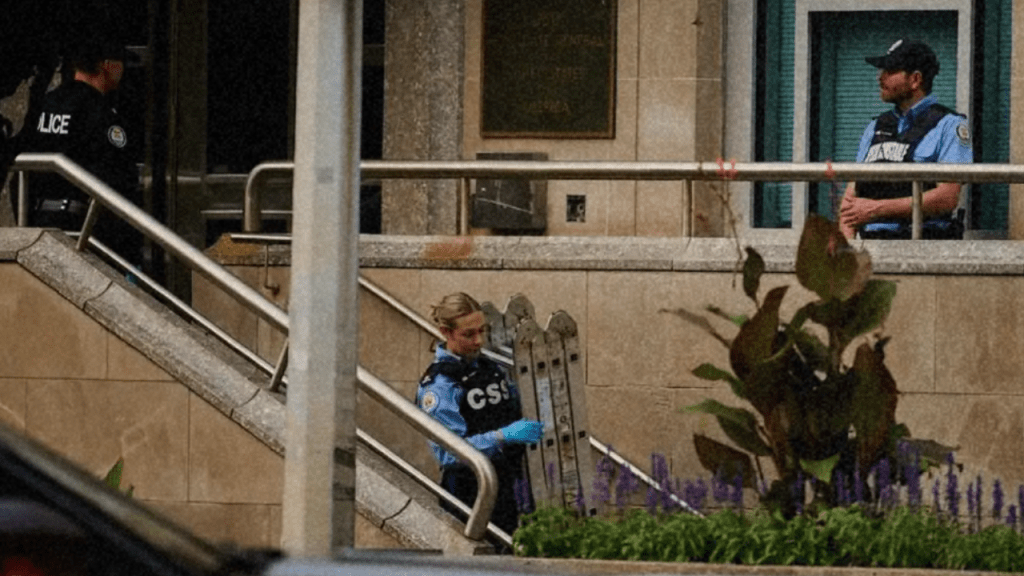
The Toronto consulate shooting happened in one of the most surveilled parts of the city, outside a highly secure diplomatic building, with shell casings, cameras, a vehicle description, and immediate national-security attention. The RCMP’s Integrated National Security Enforcement Team was engaged. FBI coordination was announced. Public officials condemned the attack within hours.
The vehicle still disappeared from public view. The problem is not that police lacked a rhetoric of surveillance. Toronto already had ALPR-equipped patrol vehicles scanning more than a million plates a day. The consulate area was already part of a dense security environment. The state had cameras, coordination, and a vehicle description, but the political outcome was still a demand for more security rather than an accounting of what failed.
These cases matter for Ontario’s ALPR debate because they show what surveillance rarely does politically. It rarely produces accountability for failure. It produces arguments for expansion. A missed vehicle becomes proof that the net was not wide enough. An unresolved attack becomes proof that the apparatus needs more tools.
Surveillance scales quietly
Supporters of highway ALPR can describe the system as narrow. The stated target is organized retail theft. The camera looks for vehicles linked to theft, stolen plates, wanted people, or serious investigations. The public is invited to imagine a clean line between ordinary drivers and criminal targets.
Surveillance infrastructure rarely stays confined to its first justification. A fixed camera installed for retail theft can later serve stolen-vehicle investigations, bail enforcement, protest monitoring, immigration cooperation, insurance disputes, traffic enforcement, or intelligence gathering. The political reason for building the network can change after the network exists.
ALPR is especially suited to expansion because the data becomes more useful as the system grows. More cameras create better geographic coverage. Longer retention creates better retrospective searching. More connected agencies create more possible uses. Each expansion can be defended as a practical improvement rather than a political transformation.
Most people never experience this as a direct confrontation. No officer stops them. No conversation happens. The scan occurs passively, behind the ordinary act of driving. Surveillance becomes part of the road.
Fordism keeps the state
Ford’s brand of slopulism is not anti-state. It is selective about which parts of the state are allowed to grow. Environmental regulation becomes red tape. Municipal speed enforcement becomes a cash grab. Police expansion, prosecution teams, highway surveillance, and law-and-order legislation become common sense.
The state does not shrink in this model. It reorganizes around property, policing, and the resentments of the suburban driver. Enforcement directed at Ford’s base is framed as overreach. Enforcement directed at disorder, crime, and commercial threat is framed as protection.
The result is not inconsistency. It is class discipline expressed through populist language. Drivers are protected from automated punishment. Retail property is protected through automated monitoring. The same technology moves from tyranny to safety when its political function changes.
Ontario’s camera politics make the alignment clear. The government did not reject automated enforcement. It rejected automated enforcement that made drivers pay. Once the same surveillance logic served retail capital and policing infrastructure, the objection disappeared.
Who the camera serves
The highway ALPR proposal did not appear as a dramatic authoritarian rupture. It appeared as an ordinary administrative possibility inside a crime bill: feasibility, cost, privacy, enforcement, prosecution. Surveillance expands most easily when it arrives as a reasonable solution to a problem already defined by police and property owners.
By late 2025, Ontario municipalities were removing speed cameras from school zones and community safety areas. By May 2026, the province was exploring licence-plate cameras on highways for organized retail theft. One system measured speed where vulnerable road users could be killed. The other would track vehicles in the name of commercial order.
The road remains the same road. The plate remains the same plate. The camera becomes oppressive or protective according to the interest behind it.
Sources
- CityNews Toronto report on Ontario considering highway ALPR cameras for organized retail theft, May 25, 2026.
- Toronto Police Service ALPR page covering plate scans, retained records, hotlists, retention periods, and scan volume.
- Information and Privacy Commissioner of Ontario guidance on ALPR systems by police services.
- Guardian report on Doug Ford’s September 2025 speed-camera ban announcement and cash-grab framing.
- Ontario government announcement on legislation to ban municipal speed cameras, September 25, 2025.
- City of Mississauga notice on Bill 56, speed-camera decommissioning, and the city’s reported average speed reduction.