Canada signed a $10 billion LNG deal with Germany on May 27. China runs the only working thorium reactor, built on technology the US abandoned in 1973.
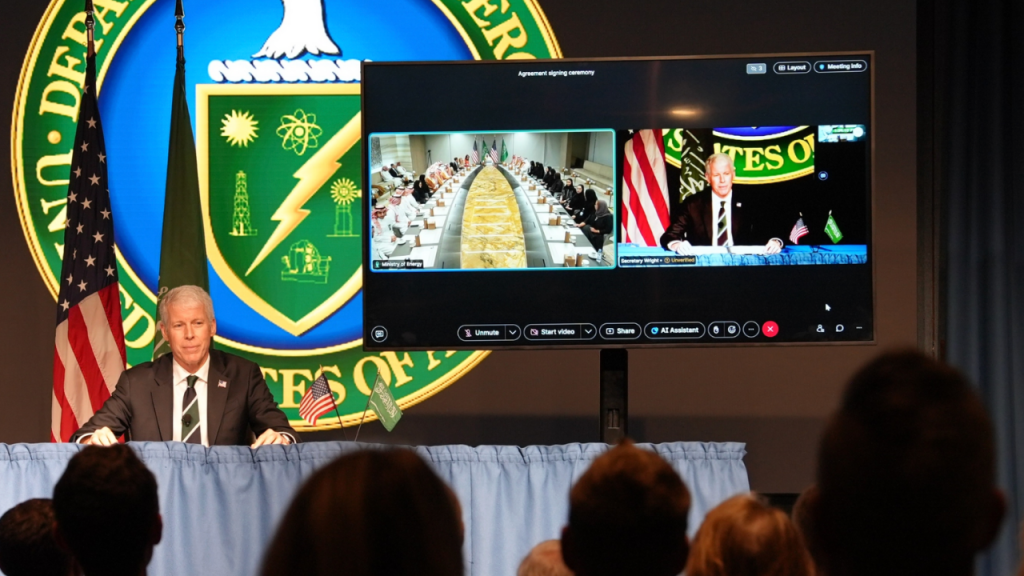
On Wednesday, May 27, 2026, federal Energy Minister Tim Hodgson announced a landmark export agreement with Germany: one million metric tonnes of liquefied natural gas per year for twenty years, from the proposed Ksi Lisims terminal on Nisga’a Nation territory north of Prince Rupert, BC. The buyer is SEFE — Securing Energy for Europe — the German state utility that used to be Gazprom Germania before Berlin nationalised it when Russia cut off gas in 2022. The facility is projected to cost roughly ten billion dollars. Prime Minister Mark Carney said Canadian LNG would displace Russian gas in international markets.
The framing is worth unpacking. Germany needs the gas because it walked away from its main Russian supplier after the 2022 invasion of Ukraine, and because most Middle East gas is offline amid the United States–Israeli war against Iran. The “energy crisis” Carney says Canada can help solve is the crisis the NATO sanctions regime and the Iran war jointly produced. Germany is not looking for the best fuel on an open market. It is an industrial economy cut off from cheaper supply lines for geopolitical reasons, and Canada is selling expensive LNG into the gap policy created.
The ownership structure is worth its own paragraph. Ksi Lisims has been marketed as “largely Indigenous-owned,” and the Nisga’a Nation does hold a significant stake. The plant itself will be constructed, owned, and operated by wholly-owned subsidiaries of Western LNG, a Houston company. The French oil major TotalEnergies signed for two million tonnes a year in May 2025 and took a five per cent stake in Western LNG, with an option to double it. Texas and Paris hold the operating positions. Some local Indigenous communities oppose the project on emissions and ecological grounds. Anti-pipeline signs line the Hazeltons.
The deeper problem is what the fuel actually is. A 2024 Cornell University study by Robert Howarth, published in Energy Science & Engineering, found LNG’s greenhouse gas footprint over a twenty-year horizon is roughly thirty-three per cent larger than coal. Methane is more than eighty times more potent than carbon dioxide over twenty years, and it leaks through every stage of LNG’s supply chain. Only about a third of the lifecycle emissions come from end-user combustion. Ksi Lisims will be “net-zero ready” by 2030, meaning its liquefaction stage runs on BC Hydro. That changes nothing about the rest.
Canada is signing a twenty-year contract on a fuel that the most recent peer-reviewed lifecycle study finds is worse than coal. Germany is signing it because the West has spent four years constructing an energy crisis that left it with no cheaper option. This is the choice the Western alliance is making in 2026. The alternative existed in 1969.
The reactor America abandoned
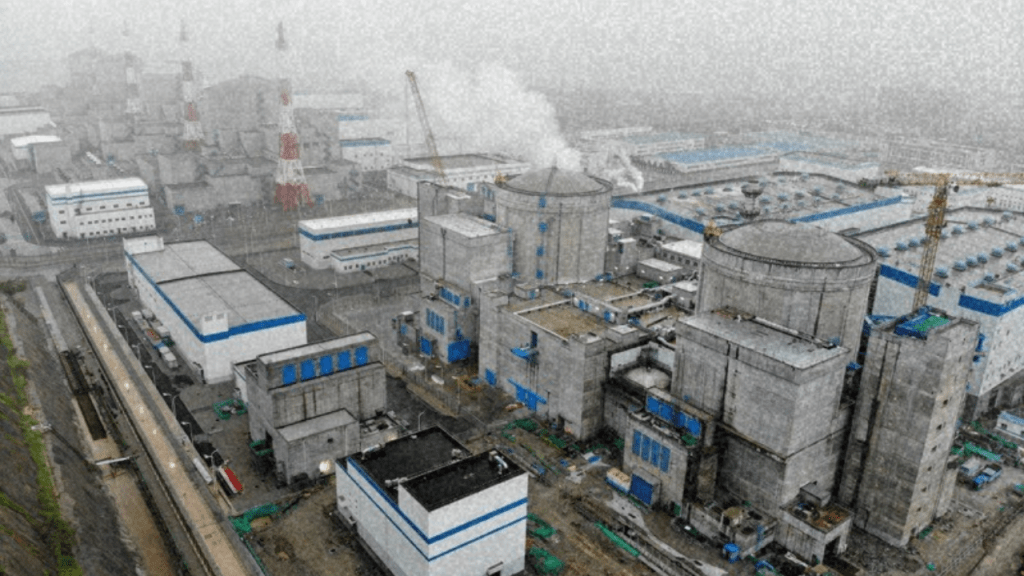
The TMSR-LF1 at Wuwei, in Gansu Province near the edge of the Gobi Desert, is the only working thorium reactor on Earth. The United States built the first molten salt reactor in the 1960s, ran it for four years, and walked away. China picked up the declassified documents, ran a fourteen-year state research program, and now operates the only one. This is not a story about Chinese innovation. It is a story about American abandonment, and the man who led China’s program has said as much in plain terms.
One clarification is worth making at the outset, because two different technologies get persistently confused. The thorium molten salt reactor is not cold fusion. Both involve nuclear reactions and both involve unusual materials, and that surface resemblance leads people to collapse them into one thing. They are entirely separate research programs, in different institutions, at different temperatures, through completely different physical processes. The real story — what China built, what the United States abandoned, and why — is more interesting than the confusion.
What the thorium reactor actually is
The TMSR-LF1, operated by the Shanghai Institute of Applied Physics under the Chinese Academy of Sciences, is a two-megawatt fission reactor that runs at around 700°C. The molten salt — a fluoride mixture — is the coolant and the fuel carrier, not the source of any exotic reaction. It splits heavy atoms apart, the same fundamental process as every nuclear reactor that has ever generated electricity. What makes it different from conventional reactors is the salt.
Because the salt is already liquid at operating temperature, it cannot undergo the phase change that produces catastrophic pressure buildups in water-cooled reactors. Superheated steam is what causes nuclear accidents — the pressurized water systems conventional reactors use are inherently dangerous, because a loss of cooling can produce steam explosions and hydrogen fires. The molten salt system operates at atmospheric pressure. It cannot boil. The physics of the accident scenario that destroyed Chernobyl and Fukushima simply does not apply.
The reactor can also be refueled without being shut down — spent material filtered out of the salt and new fissile material dissolved in, continuously, while it runs. No shutdown, no fuel rods, no spent assemblies accumulating in cooling pools.
In early November 2025, the TMSR-LF1 did something no reactor had done before: it converted thorium-232 into uranium-233 in an operating reactor. Thorium-232 is not itself fissile, but when it absorbs a neutron it transmutes into uranium-233, which is. The reactor breeds its own fuel, from an element so abundant that China’s reserves could, by some estimates, meet its energy needs for thousands of years.
What cold fusion actually is
Cold fusion — properly called Low Energy Nuclear Reactions, or LENR — is a different lineage entirely. Stanley Pons and Martin Fleischmann were electrochemists at the University of Utah who announced in 1989 that they had achieved fusion at room temperature in a glass jar, using palladium electrodes and heavy water. Mainstream physics tried to replicate the result, largely failed, and the field was buried. The surviving researchers rebranded the work as LENR and kept publishing, but outside the mainstream — in journals that would take it, at conferences the research community organized itself.
China takes LENR seriously. Tsinghua University has run programs in the field for over twenty years; Xiamen University hosted a major international cold fusion conference in 2021; and researchers in the Chinese Academy of Sciences publish on excess heat in palladium-deuterium cells, a refined Pons-Fleischmann setup. A 2016 DARPA briefing to Congress flagged Chinese, Japanese, Italian, Russian, Indian, and Israeli LENR programs and called the technology potentially disruptive to energy production. ARPA-E put ten million dollars into eight LENR projects in 2023 — a rounding error against what China has funded continuously through state institutions since the nineties.
The point is not that LENR is proven. The point is that it is the second nuclear field the United States originated and then declined to pursue while others did.
What the US built and walked away from
The Molten Salt Reactor Experiment at Oak Ridge National Laboratory ran from January 1965 to December 1969. It was the world’s first working molten salt reactor, it logged more than thirteen thousand hours at full power, and in 1968 it became the first reactor ever to run on uranium-233 — the same fuel the TMSR-LF1 is now breeding from thorium. The program was ended in 1973. The official reason was budget and a shift in priority toward the liquid metal fast breeder program.
The structural reason is more telling. The molten salt reactor does not produce weapons-grade plutonium as a byproduct, which made it less useful to a military-industrial complex that needed the civilian and military nuclear programs to stay compatible. It also threatened the long-term economic logic of the uranium fuel cycles that existing industry players controlled. A technology that was safer, harder to weaponize, and cheaper to fuel was, for precisely those reasons, a poor fit for the institutions that decided which technologies lived.
The Oak Ridge documents were declassified, and for decades almost no one touched them. Then, beginning around 2011, China’s program under the Shanghai Institute of Applied Physics did. The lead scientist on the project, Xu Hongjie, described it without euphemism: the United States “left its research publicly available, waiting for the right successor,” and his team “were that successor.” They “mastered every technique in the literature,” he said, “then pushed further.”
First criticality came in October 2023, full power in 2024, the thorium-to-uranium breakthrough in 2025, with a small modular demonstration reactor targeted for around 2029 and a hundred-megawatt demonstration plant for 2035.
The contrast with American nuclear construction is its own argument. In the years China was building out the largest new-build reactor fleet on the planet, the United States produced the Vogtle plant in Georgia — billions over budget, years behind schedule, a project that became a national symbol of infrastructure dysfunction. One country was building reactors. The other was building a cautionary tale about why it could no longer build them.
Fukushima is the coda. Japan built pressurized water reactors — the technology that produces the dangerous steam pressure — because that was the technology the Western nuclear industry was selling. When the 2011 earthquake and tsunami knocked out external power to the cooling systems, the reactors lost the ability to manage their own heat, and the result was three meltdowns and a contamination event still unresolved more than a decade later.
A molten salt reactor does not have that failure mode; it does not depend on external power to stay safe. The US walked away from the safer technology, its industry sold the dangerous one to its allies, and the consequences are still accumulating.
They didn’t out-innovate us
The framing of Chinese technological advancement as a threat — something achieved through theft, espionage, or some inherent civilizational edge — serves the people who benefit from American technological stagnation. The thorium reactor was not stolen. The documents were declassified; China read them, funded a program, and ran it for fourteen years until it worked. The LENR research is not secret either. It is published in journals and presented at conferences anyone can attend. The story the threat-framing cannot accommodate is the simplest one: the technology was sitting in the open, and someone else chose to pick it up.
What China did was patient, state-directed, long-horizon research in two nuclear fields the United States either invented and abandoned or invented and persecuted. The Oak Ridge program was cancelled because it did not fit the economic and military structure of the American nuclear industry. The Pons-Fleischmann work was buried because it threatened the credibility of mainstream physics and the funding structures attached to it. In both cases the decision to abandon was made by people whose institutional interests were served by abandonment.
The technology did not vanish. It moved to the countries willing to fund it without demanding it immediately serve existing power.
China did not out-innovate the United States. It out-disciplined it. It kept showing up to the lab while the American system was too busy financializing everything to remember why the lab existed. The thorium reactor near the Gobi Desert is not a Chinese invention. It is an American invention that America made itself forget, operated now by the country that simply remembered — and was willing to spend the years it takes to finish what someone else started and abandoned.
That is the context Ksi Lisims is being signed into. Canada and Germany are committing tens of billions to a fuel a Cornell scientist has shown is worse than coal, because the imperial economic order their governments helped construct has cut them off from cheaper alternatives — and because the technological alternative that would have made the LNG buildout unnecessary is running in Gansu, built from documents an American lab declassified more than fifty years ago. The crisis Carney says LNG can solve was built by his predecessors. The technology that could have prevented it was built by theirs.
Sources
- World Nuclear News — Chinese MSR achieves conversion of thorium-uranium fuel (TMSR-LF1, Nov 2025, first criticality Oct 2023)
- Chinese Academy of Sciences (Xinhua) — China achieves thorium-uranium fuel conversion; 100 MW demonstration targeted 2035
- Nuclear Engineering International — China achieves first-ever thorium-to-uranium conversion (SINAP, only operational thorium-loaded MSR)
- POWER Magazine — China’s molten salt reactor milestone; 10 MW demo ~2029, 100 MW by 2035 roadmap; 2011 CAS program
- Aveva — China’s TMSR-LF1 (Oak Ridge origin; Xu Hongjie “we were that successor” quote; thorium fuel cycle)
- Oak Ridge National Laboratory — MSRE history (Jan 1965–Dec 1969, 13,000+ hours at full power)
- Oak Ridge National Laboratory — MSRE first reactor to run on U-233 (Oct 1968); program ended 1973
- South China Morning Post — China’s thorium reserves and the demonstration timeline
- CBC News — Canada reaches “milestone” deal to sell LNG from Ksi Lisims project to Germany (May 27 2026); SEFE buyer, Nisga’a ownership, Hazeltons pipeline opposition
- Cornell Chronicle — Robert Howarth, Energy Science & Engineering (2024); LNG greenhouse gas footprint 33% larger than coal over 20-year window; methane leak analysis across LNG supply chain
- POWER Magazine — China’s advanced nuclear program (criticality and full-power dates, fleet expansion)