
Canada’s Iran war response invokes international law without naming the aggressor, questioning the war’s legality, or suspending a single military agreement with the state issuing annihilation threats.
Trump’s Ultimatum Targets Civilian Infrastructure Directly
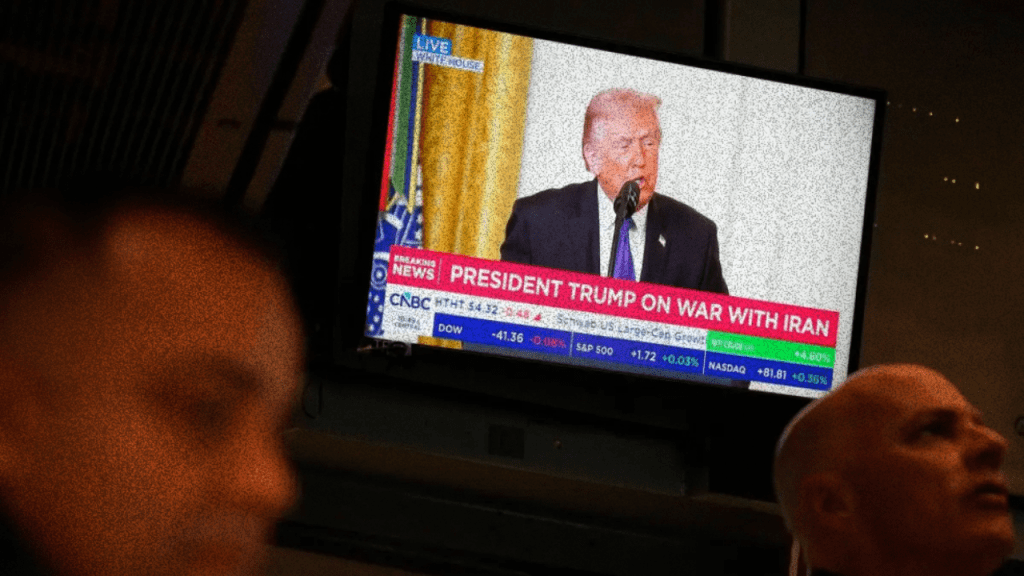
On April 7, 2026, Donald Trump posted to Truth Social: “A whole civilization will die tonight, never to be brought back again.” This was not campaign language or hyperbole deployed for a domestic audience. It was a deadline. Trump had given Iran until 8 p.m. Eastern to agree to reopen the Strait of Hormuz, threatening to order the destruction of Iran’s power plants and bridges if no deal was reached. PBS NewsHour confirmed the statement verbatim, with Trump adding: “I don’t want that to happen, but it probably will.” The target infrastructure — power plants, bridges — is civilian infrastructure. International humanitarian law does not permit targeting it unless it constitutes a direct military objective under strict conditions. A head of state publicly announcing intent to destroy that infrastructure, timed to a political ultimatum over a maritime chokepoint, is not a policy position on a spectrum of normal escalation. It sits outside that spectrum entirely. That is the factual floor this article builds from.
The context makes the statement more damning, not less. The U.S. had already struck Kharg Island and multiple bridges and railways throughout April 7 alone. Trump had previously threatened to bomb Iran “back to the stone ages.” He said Monday he was “not at all” concerned about committing war crimes. UN Secretary-General Guterres warned the same day that attacks on civilian infrastructure are banned under international law. Pope Leo XIV called the threat “truly unacceptable.” The question this raises is immediate and specific: what does a government that describes itself as committed to international law say in response to all of this?
Carney Answered How — Not Whether This War Is Legal
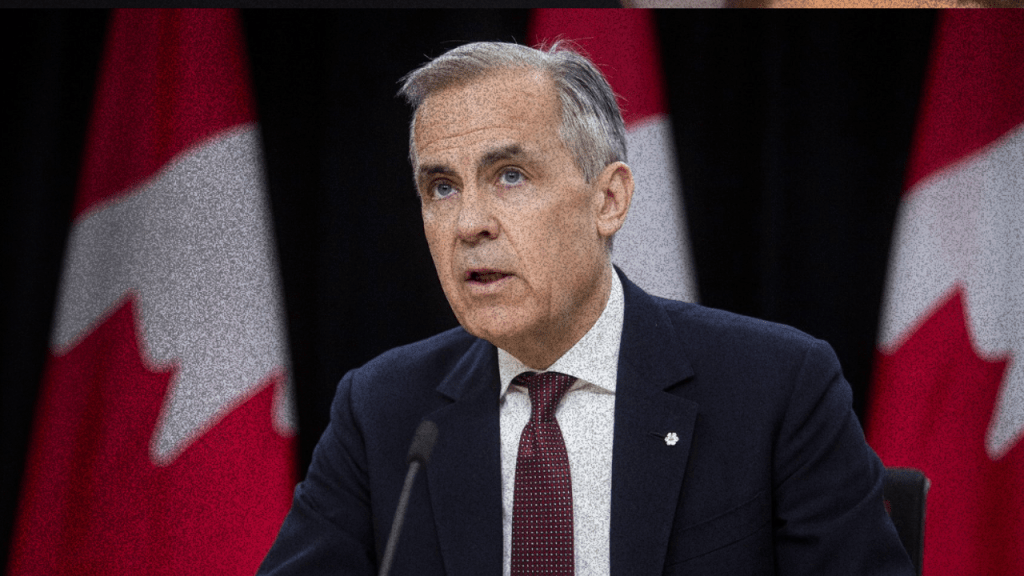
Mark Carney’s response came the same day, at a news conference in Brampton. “Canada expects all parties in this conflict, in any conflict, to respect international laws,” he said. “That means not targeting civilians or civilian infrastructure. And we urge all parties in this war to follow those responsibilities.” The Canadian Press confirmed that Carney “didn’t single Trump out specifically.” Asked directly whether he agreed with French President Macron’s criticism of Trump’s rhetoric, Carney declined to engage with the comparison. He did, however, offer Trump cover: “There is often a gap between what’s said publicly and what’s happening privately.”
The statement is not inaccurate. It identifies real principles of international humanitarian law — protection of civilians, protection of civilian infrastructure. The problem is not what the statement contains. The problem is what it forecloses by its structure. Carney did not name Trump. He did not name the United States. He placed all parties inside the same legal frame and applied the same expectations symmetrically. This is the operating logic of jus in bello — the body of law governing conduct within war. It assumes the war is a given and asks only that it be conducted within limits. The question this structure never reaches is jus ad bellum: whether the war is legal at all. That question, under the UN Charter, turns on whether military action constitutes aggression. An ultimatum threatening the destruction of a country’s civilian infrastructure to force a geopolitical concession over a maritime chokepoint is the textbook definition of the threat of aggression. Carney’s response answered the narrower question so completely that the larger one was never available to be asked. That is not an oversight. It is a political choice.
Symmetric Language Applied to Annihilation Is Not Neutral
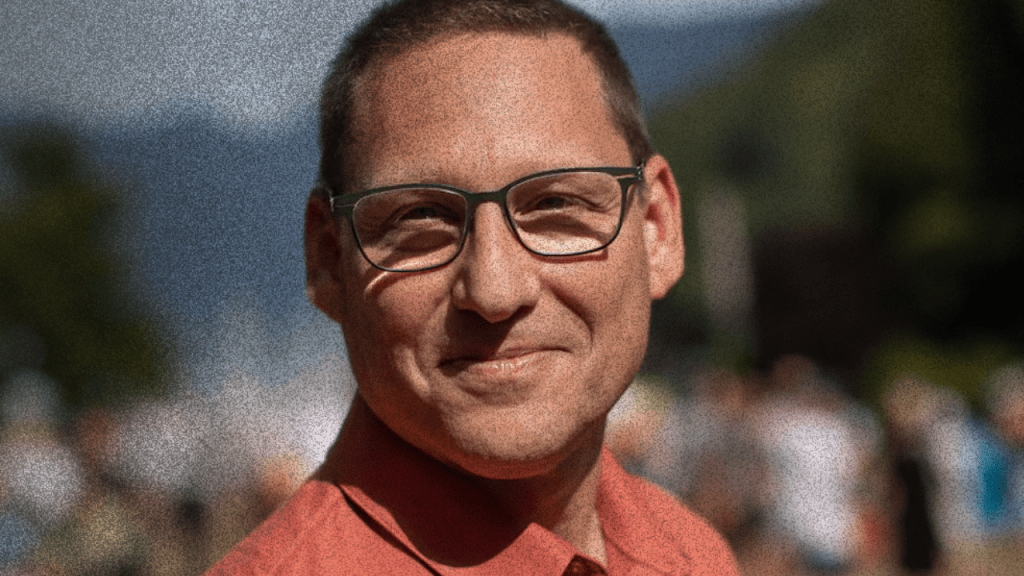
Heidi Matthews, an assistant professor of international criminal law and the law of war at Osgoode Hall Law School, identifies the central problem: omission carries weight. The choice not to condemn an extreme threat directly is not the absence of a position. It is a position. When one actor escalates to the level of publicly threatening to destroy a civilization and name the specific civilian infrastructure it will target, treating all parties as equivalent participants in a generalized call for restraint does something structurally specific — it absorbs the extraordinary into the ordinary. The asymmetry disappears. The threat of annihilation becomes one data point inside a framework designed to manage routine conflict.
Amnesty International framed Trump’s language explicitly in terms of atrocity prevention — a threshold at which rhetoric signals intent that cannot be reconciled with civilian protection principles. Bloc Québécois leader Yves-François Blanchet went further, calling on Carney to summon U.S. Ambassador Pete Hoekstra to inform him Canada “will not condone any words or actions of such violence against civilians.” That demand names the actor and requires a material response. Carney’s statement does neither. Liberal neutrality’s insistence on even-handedness does not preserve the framework in moments of extreme asymmetry — it transforms it. The rules survive formally while their moral content is evacuated. This is the mechanism by which what should be treated as exceptional gets normalized. And normalization is not a passive outcome. It is what Carney’s language performs.
The War’s Legality Is the Question Carney Won’t Raise
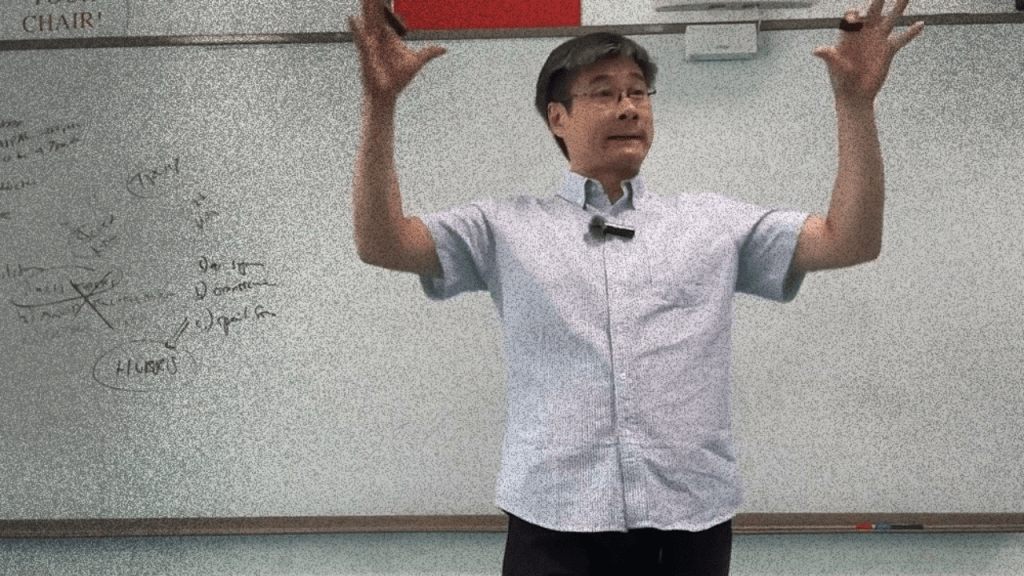
Ted Rutland, a structural political analyst at Concordia University, identifies the foundational evasion directly: Carney’s statement answers how war should be conducted while leaving untouched whether this war is legal at all — and that omission is a political choice, not an oversight. The argument stands on documented legal architecture. Under Article 2(4) of the UN Charter, states are prohibited from threatening or using force against the territorial integrity of another state. Under Articles 39–42, only the Security Council can authorize military force outside of self-defense. An ultimatum threatening to destroy Iran’s civilian infrastructure unless it makes a geopolitical concession — reopening the Strait of Hormuz — is not self-defense under any credible reading of Article 51. It is the threat of aggressive war.
If the war is unlawful at its foundation, the jus in bello framework does not become irrelevant — but it becomes secondary. Every rule of conduct applied within an illegal war is situated inside an already-illegal framework. Carney’s response treats the conflict as something that can be managed through restraint rather than something that must be questioned at its root. The narrowing this produces is not incidental — it is the point. Once the debate is reduced to how the war is being fought, the question of whether it should exist at all is no longer available. This is exactly how perception management operates at the state level: not through lies but through the careful delimitation of what questions are permitted inside legitimate discourse. Rutland’s critique relocates the boundary.
Canada Is Not an Observer — It Is a Material Participant
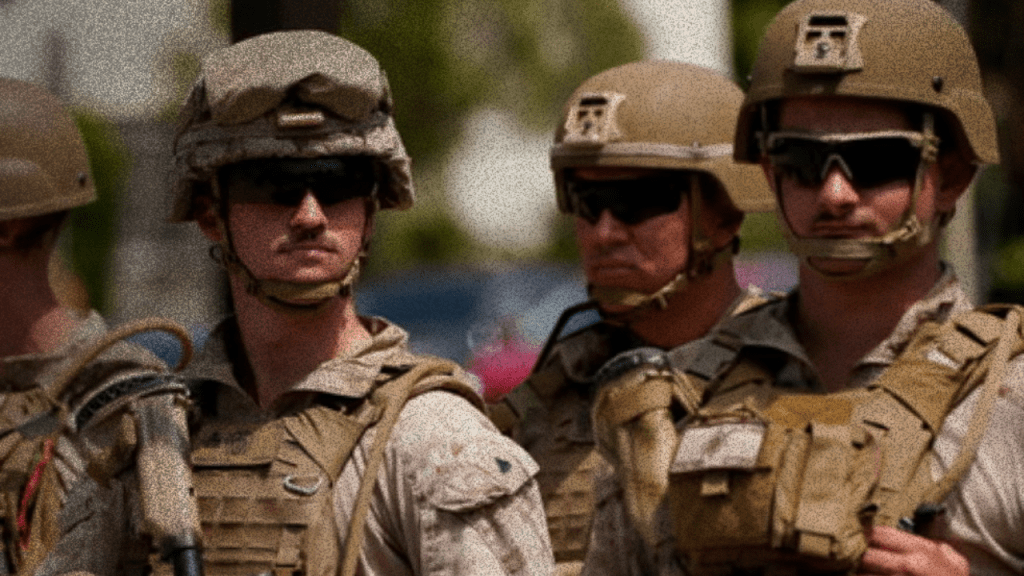
Yves Engler moves the argument from language to policy. Writing at Antiwar.com, Engler documents what Canada’s rhetorical distancing papers over: U.S. warplanes have used Canadian airspace. Through NORAD, hundreds of Canadian soldiers assist the U.S. with monitoring West Asia. Through Operation FOUNDATION, Canadian forces members directly support USCENTCOM Middle East operations — deployed to Qatar, Bahrain, Tampa, and Jordan. Canadian officers were formally added to the U.S.-led Operation Prosperity Guardian. Canada’s base in Kuwait sits inside the operational theater. Canada holds approximately 500 military accords with the United States and sold more than $2 billion in arms to the U.S. in the year prior. These are not symbolic relationships. They are operational.
Calling for all parties to respect international law while every one of these relationships remains intact is not a principled position with rhetorical limits. It is a contradiction. Engler’s demand — pause arms sales, suspend military accords — is the only move that would make Carney’s stated principles materially coherent. Without it, the statement functions as cover. It allows Canada to position itself inside a rules-based discourse while remaining structurally fused to the state issuing the annihilation threat. Carney initially supported the war as a means to prevent Iran from obtaining a nuclear weapon. Days later he called the conflict “another example of the failure of the international order.” He expressed “regret” while maintaining every material tie. The distance between those two positions is not a contradiction being resolved. It is the contradiction that constitutes Canada’s policy. And it brings the argument to its final turn.
Western Proceduralism Under Escalation Is Alignment
What Carney’s response reveals is not a Canadian failure. It is a Western pattern. When extreme rhetoric emerges — when the threshold moves from conventional escalation to threats of civilizational destruction — the reflex of Western states is not to name the rupture. It is to absorb it into procedure. Invoke international law. Emphasize restraint. Avoid direct confrontation. Maintain alignment. This approach preserves short-term stability. It avoids diplomatic rupture. It keeps alliance structures intact. It also transforms the terms under which extreme events are processed. A threat to destroy a civilization’s power grid and bridges becomes legible only as one more instance requiring all-party restraint. The framework survives. The moral content of the framework does not.
This is precisely what political economy analysis of Western alliance behavior predicts — states embedded in asymmetric power relationships do not name the hegemon because naming it carries material cost. Carney’s government is not going to suspend NORAD. It is not going to pause arms agreements. It is not going to characterize Trump’s ultimatum as what it is under the UN Charter. The procedural language is not a step toward those positions that hasn’t quite arrived — it is a substitute for them. Neutrality here is not the absence of a position. It is the position of managing contradiction without resolving it, of maintaining alignment while performing concern. When the stakes are defined in terms of civilizations living or dying, that performance does not look like restraint. It looks like what it is: complicity through procedure.

 Spark Solidarity