
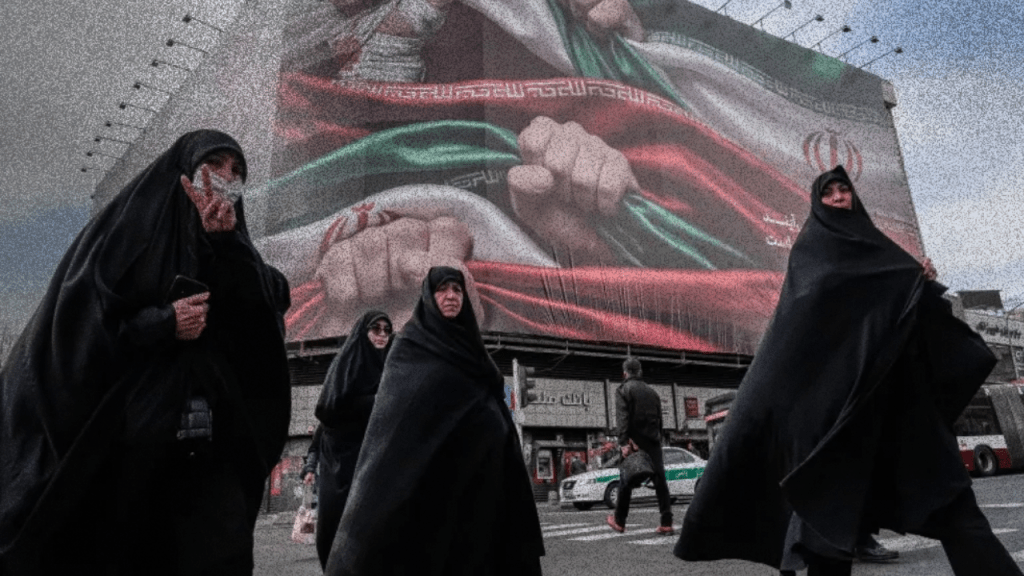
Iran war narrative in Western media inverts documented chronology. U.S. and Israel struck nuclear facilities first. Iranian retaliation became the story of aggression.
U.S. and Israel Struck First. Iran Retaliated.
The United States and Israel launched military operations against Iran on February 28, 2026. On March 21, U.S. and Israeli forces struck the Natanz nuclear facility — Iran’s primary uranium enrichment site — using bunker-buster bombs. Hours later, Iran launched retaliatory strikes on Israeli cities. This chronology is not disputed. Western coverage presented the Strait of Hormuz as a threat to global oil supply without acknowledging that Iran was under active bombardment when it retaliated. The sequence matters because it determines who initiated and who responded.
Striking a nuclear enrichment facility constitutes an act of war against nuclear infrastructure. Iran did not fire first. It fired back. The distinction disappeared in most Western reporting, which positioned Iranian missile launches as the destabilizing event rather than the consequence of prior military action. The retaliation became the headline. The strike that produced it became context, when mentioned at all.
Iranian Retaliatory Strikes Followed a Documented Timeline
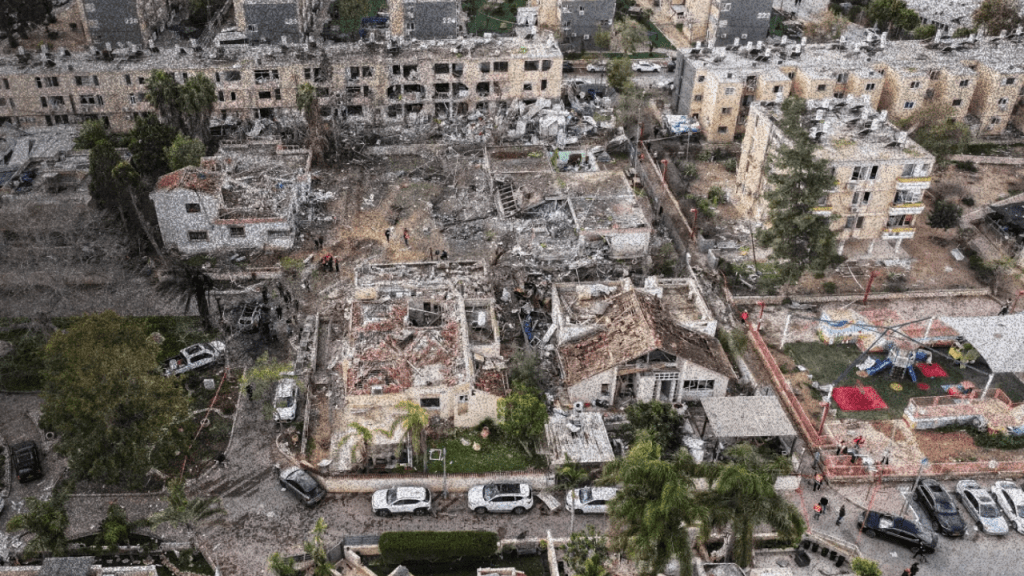
On March 19, Iranian missiles struck the Haifa oil refinery in northern Israel. Four people were wounded in Kiryat Shmona when missiles fired from Lebanon hit the town. On March 21, following the Natanz strike, Iran fired on Dimona and Arad, injuring nearly 180 people. Each of these events occurred after U.S.-Israeli operations had already begun and after nuclear infrastructure had been targeted. None of these strikes originated the conflict. They responded to it.
The targets included military-adjacent infrastructure and population centers, which Western media framed as unprovoked aggression despite the timeline showing otherwise. Iranian retaliation became the story of escalation. U.S.-Israeli strikes — including repeated attacks on nuclear facilities and the killing of Iran’s supreme leader on the first day of the war — appeared in coverage as preconditions rather than causes. The frame inverted cause and effect so completely that Iran’s defensive posture became the threat and its attackers became the aggrieved parties.
Strait of Hormuz Coverage Erased the Bombardment Context
The Strait of Hormuz carries approximately one-fifth of global petroleum supply, according to the U.S. Energy Information Administration. Coverage emphasized the economic vulnerability this transit point represents, positioning Iran as menacing global energy markets. What the coverage systematically omitted was that Iran was defending a waterway adjacent to its territory while under active aerial attack. The economic stakes are real. The causal sequence was inverted.
Framing Iran as the aggressor threatening global oil supply requires erasing the fact that Iran was bombed first. It requires treating Iranian restrictions on vessels from attacking nations as an unprovoked assault on international commerce rather than a documented response to a war being waged against Iranian territory. That erasure is not accidental. It is how the consent-manufacturing apparatus functions: isolate the retaliation, strip the context, reposition the target as the threat.
Iraq 2003 Followed the Same Narrative Architecture
The Iraq invasion was sold through claims about weapons of mass destruction presented without meaningful interrogation of their evidentiary basis. Academic research on pre-war network news coverage found that 40 percent of all anti-war quotes in the months before the invasion were attributed to Saddam Hussein and his associates — effectively framing opposition to the war as enemy propaganda. The Bush administration accounted for 28 percent of all source quotes. Alternative perspectives from members of Congress or anti-war groups received scant air time. Coverage focused on procedural questions about how the war would unfold rather than whether the underlying threat assessment was accurate.
The pattern repeats with Iran. The retaliation is isolated from the strike that provoked it. The waterway becomes a threat rather than a defensive position. The target state is positioned as the aggressor. The timeline is acknowledged in fine print and erased in headlines. This is not media bias in the conventional sense — it is structural narrative construction designed to manufacture consent for military action against designated adversaries. The factual sequence is available in the public record. U.S. and Israeli forces struck first. Iran retaliated. The coverage inverted this. The Iraq precedent demonstrates that this inversion is not accidental, not correctable through better journalism, and not a failure of the system. It is the system working as designed.
Sources
- Al Jazeera — Iran says US and Israel attacked Natanz nuclear facility, March 21, 2026
- Al Jazeera — Israel confirms oil refinery in Haifa hit in Iranian missile attack, March 20, 2026
- Times of Israel — 4 wounded as multiple missiles fired from Lebanon hit Kiryat Shmona
- U.S. Energy Information Administration — The Strait of Hormuz is the world’s most important oil transit chokepoint
- Political Communication — Whose Views Made the News? Media Coverage and the March to War in Iraq




 Spark Solidarity