
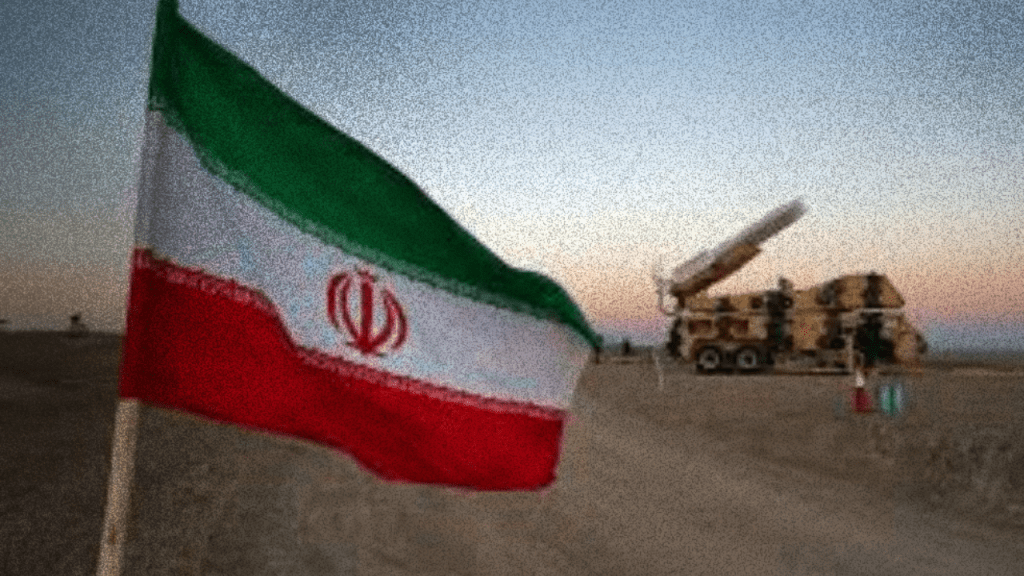
Iran deterrence strategy works because it targets material interests, not conscience. The Strait of Hormuz closure is a lesson in what actually threatens imperial power.
Moral Appeals Do Not Change Material Incentives
The logic behind every petition, every rally, every viral video of Palestinian suffering assumes the same thing: if the moral case is made clearly enough, public opinion will shift and politicians will be forced to change course. This framework is wrong. The system is not responsive to moral appeals when those appeals conflict with material interests. The United States supports Israel because Israel serves U.S. imperial interests in the Middle East. Canada supports the U.S. because Canadian capital is integrated with U.S. capital and the Canadian state depends on that relationship. The weaponized diaspora apparatus exists precisely because Western states understand that managing perception is cheaper than changing policy. None of that changes because someone watches a video of a dead Palestinian child. It should matter. It doesn’t change the material incentives that drive policy.
Material conditions drive change. Economic crisis. Imperial overextension. Internal contradictions that make the current arrangement unsustainable. Iran understands this. The Strait of Hormuz closure is the clearest demonstration of that understanding in recent history — and the most instructive lesson available to anyone asking what kind of opposition actually threatens empire.
The Strait of Hormuz Closure Hit Where It Hurts
On March 2, 2026, an IRGC official confirmed the Strait of Hormuz was closed. The IRGC stated that not “a litre of oil” would pass through the waterway and threatened $200 per barrel oil if the U.S. attempted to artificially suppress prices. The strait handles approximately 27% of the world’s maritime trade in crude oil and petroleum products. Tanker traffic dropped by approximately 70%. Over 150 ships anchored outside the strait rather than risk Iranian attack. Brent crude surpassed $100 per barrel on March 8 — the first time in four years — and peaked at $126 per barrel. The IEA described it as the largest disruption to the global energy supply since the 1970s energy crisis.
The immediate cascade was measurable. Iraq and Kuwait began curtailing oil production in early March as storage filled with nowhere to export. The Dallas Federal Reserve modeled the closure as lowering global real GDP growth by an annualized 2.9 percentage points for the affected quarter. Goldman Sachs raised its U.S. recession odds by 5 percentage points to 25%. The International Energy Agency took the unprecedented step of releasing 400 million barrels from global emergency reserves — enough to cover approximately 20 days of normal Hormuz flow. It was a market stabilization measure. It was not a solution. As one analyst put it, the reserve release could calm panic but could not replace the lost function of a disrupted shipping corridor.
Trump claimed the closure “doesn’t really affect” the United States the way it affects other countries, pointing to U.S. domestic oil production. Energy analysts immediately disputed this. Because oil is a global commodity, price increases are felt everywhere regardless of where supply originates. The average U.S. gasoline price spiked by more than 50 cents per gallon within weeks of the closure. The claim that the world’s largest economy is insulated from the world’s largest energy disruption since the 1970s was not analysis. It was political management.
Iran Is Not Fighting to Win Conventionally — It Is Fighting to Make the Cost Unaffordable
Iran does not need to defeat the U.S. military in a conventional engagement. It never could. That is not the strategic objective. The objective is to impose costs that make continued prosecution of the war politically and economically untenable — to reach the point where the American public, already war-weary after two decades of failed imperial adventures, calculates that the price is too high. The Hormuz closure is the instrument for that calculation.
This is not a new strategy. It is the application of a principle that every serious anti-imperial movement has understood: you do not defeat empire by appealing to its conscience. You defeat it by making imperialism expensive. The Vietnamese did not win by convincing the American public that the war was morally wrong — though many came to believe that. They won by making the war cost more than the United States was willing to pay. The same logic drove the resistance in Iraq and Afghanistan through two decades of occupation that ended without U.S. strategic objectives being achieved. Iran has studied those precedents. The Hormuz closure is a direct application of them at the level of the global economy rather than the battlefield.
The Empire Is Already Overextended Before the Oil Price Shock
The Hormuz closure landed on an economy already under structural strain. As of March 4, 2026, total U.S. gross national debt stood at $38.86 trillion, increasing at an average rate of $7.23 billion per day. Interest payments on the federal debt reached $1.2 trillion in fiscal year 2025 — the third-largest spending category in the federal budget, behind only Social Security and Medicare. The Congressional Budget Office projects net interest payments rising from $1 trillion in 2026 to $2.1 trillion by 2036. The United States is paying more to service its debt than it spends on defense.
This is the context in which the Iran war was launched. Not from a position of economic strength and strategic clarity, but from a position of compounding fiscal constraint and multi-theater overcommitment — Ukraine, the Pacific, the Middle East, and now an active air and missile war against a country that controls the world’s most important energy chokepoint. Each commitment makes the others harder to sustain. The oil price shock from the Hormuz closure is not an isolated event. It is a pressure point applied to a structure that was already showing strain before the first B-2 left Whiteman Air Force Base.
What Iran Understands That Western Activists Don’t
The Western activist framework treats imperial power as though it were primarily a question of political will and public opinion. If enough people oppose the war, if enough politicians feel pressure, if enough moral arguments are made in the right forums, policy will change. This framework has been tested continuously since October 2023 through the Gaza genocide — the largest and most visible atrocity in the social media era, documented in real time, protested in every major city in the world — and it has produced no material change in U.S. weapons transfers to Israel or in the trajectory of the war.
Iran’s approach is different. It does not appeal to the conscience of the empire. It targets the economy of the empire. It calculates what the empire can and cannot afford, and it applies pressure at the point of maximum economic vulnerability. The Hormuz closure does not ask the United States to reconsider its values. It presents the United States with a spreadsheet: here is what this war costs per day in oil prices, here is what it costs in recession risk, here is what it costs in political capital when gasoline is 50 cents higher per gallon in an election cycle. That is a language imperial systems respond to. Moral appeals are not.
None of this is an argument that Iran’s government is a model or that its internal politics are beyond critique. It is an argument about strategic logic. The question for any movement that actually wants to end imperial violence is not whether the empire has a conscience that can be reached — the Gaza genocide has answered that question. The question is where the empire is most economically vulnerable, and whether movements in the West are willing to apply pressure there instead of at the gates of parliaments that have already decided.
Sources
- Al Jazeera — Iran’s IRGC says “not one litre” of oil will get through Strait of Hormuz, March 11, 2026
- Wikipedia — 2026 Strait of Hormuz crisis
- Congress.gov CRS — Iran Conflict and the Strait of Hormuz: Impacts on Oil, Gas, and Other Commodities
- Dallas Federal Reserve — What the closure of the Strait of Hormuz means for the global economy, March 20, 2026
- Axios — Oil prices, recession: What happens if Strait of Hormuz stays closed, March 12, 2026
- Al Jazeera — Strategic oil release may calm markets but cannot fix Hormuz disruption, March 15, 2026
- FactCheck.org — How Iran Blocking the Strait of Hormuz Affects the U.S., March 2026
- Joint Economic Committee — Monthly Debt Update, March 4, 2026
- GAO — Financial Audit: Bureau of the Fiscal Service’s FY 2025 Schedules of Federal Debt, January 2026
- Spark Solidarity — Weaponized Diaspora and the Witnesses Empire Needs, February 28, 2026




 Spark Solidarity