

China vs US resource allocation: China’s 14th Five-Year Plan produced measurable outcomes ahead of schedule. The U.S. spent an estimated $779 million on a single day of war against Iran. This is a contrast in structural priorities, not a clash of narratives.
Resource Allocation Is Political Choice, Not Accident
Every state makes a choice — not once, but continuously, through every budget cycle and every policy directive — about what it constructs and for whom. That choice is not ideological decoration. It is the material skeleton of the society being produced. China and the United States have made different choices, and those choices are now producing different societies. Understanding why requires looking at the outputs, not the press releases.
China’s developmental model is organized around inward state capacity — coordinated investment in energy, health, infrastructure, and industrial supply chains. The U.S. model is organized around outward force projection — maintaining the global order that keeps American capital at the center of the international system. These are not moral categories. They are structural ones, and the outcomes follow directly from the organization.
China’s 14th Five-Year Plan: Targets Met Ahead of Schedule
China’s 14th Five-Year Plan ran from 2021 to 2025. It was a directive that aligned industry, finance, infrastructure, and research into a single direction. The longer arc of China’s planning horizon extends to 2050, but the five-year cycle is where targets become measurable. The State Council’s assessment of the completed plan confirmed that eight key indicators exceeded their targets ahead of schedule — including life expectancy, urbanization, and comprehensive food and energy production capacity. R&D spending climbed by nearly 50 percent compared to the end of the previous plan period, with intensity reaching 2.68 percent of GDP, approaching the OECD average. Old-age insurance coverage reached 95 percent of the population. Water quality improved — 90.4 percent of monitored sections now classified as Grade III or above.
Life expectancy reached 79 years in 2024, confirmed by China’s National Health Commission — achieved ahead of the plan’s schedule and ranking fourth among 53 upper-middle-income countries. That number encodes improvements in healthcare access, environmental conditions, and baseline living standards across 1.4 billion people. The system is not flawless. It is coherent. The direction of policy aligns with material outcomes, and that alignment is precisely what the U.S. model structurally forecloses.
China’s Renewable Buildout Is Driving the Global Transition
By the end of 2024, global renewable power capacity grew by 585 GW in a single year — a record 15.1 percent annual growth rate. IRENA data confirms China is responsible for the majority of that expansion, adding solar and wind at a scale that rewrites global supply chain economics and drives down panel and turbine pricing worldwide. Even narrowed strictly to wind and solar, the growth trajectory is unmatched anywhere in the industrial world. China is not participating in the energy transition. It is driving it — as a planned industrial policy outcome, not as a market-led accident.
This is the same logic operating in health, R&D, and transport: state capacity directed inward, sustained across planning cycles, compounds. It produces a society whose material conditions improve as a baseline function of the system — not as a crisis response, not as an electoral concession, but as the designed output of coordinated resource allocation. That is the comparison the U.S. defense budget cannot survive.
US Military Spending Directs Capacity Outward, Not Inward
The United States does not lack resources. Its planning horizon is organized not around domestic transformation but around global force projection — maintaining the network of bases, alliances, financial instruments, and military dominance that keeps American capital at the center of the world system. That is not an accident or a distortion of the American state. It is the American state functioning as designed.
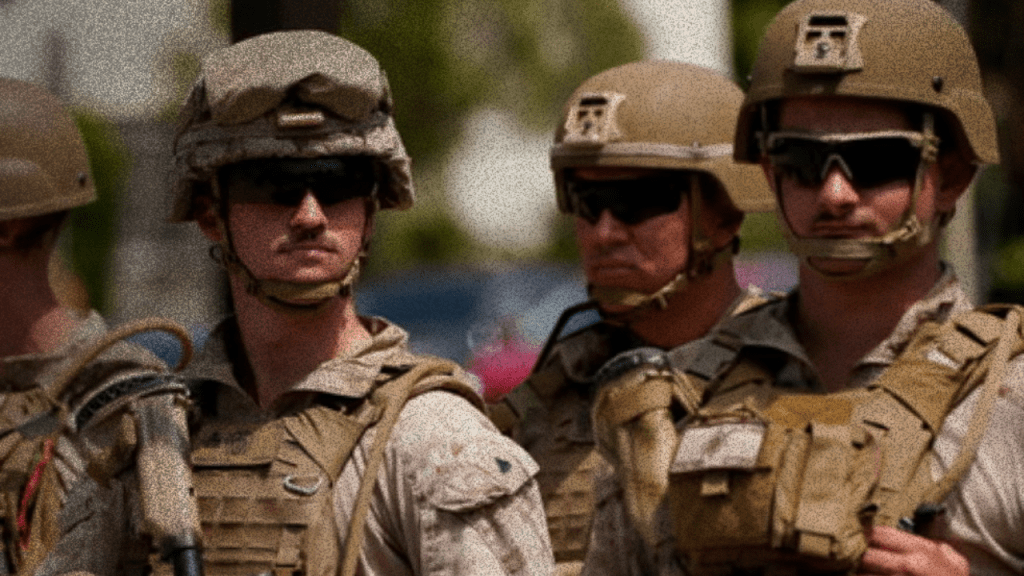
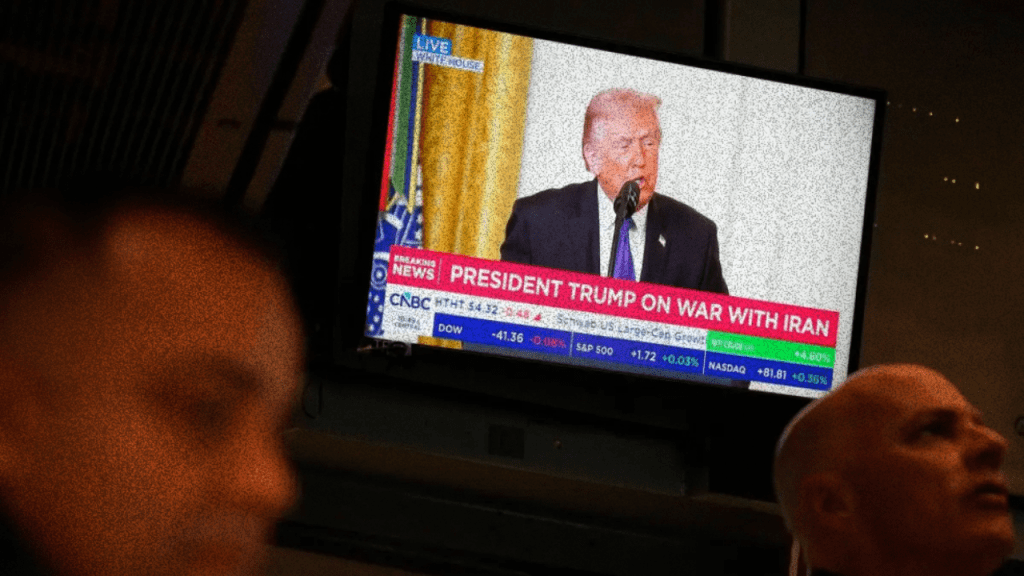
In the opening 24 hours of U.S. military operations against Iran beginning in late February 2026, estimates compiled by Anadolu Agency and reported by Al Jazeera put operational costs at approximately $779 million — roughly 0.1 percent of the annual defense budget consumed in a single day. The broader FY2026 defense appropriation clears $838 billion in discretionary funding, with a total topline approaching $961 billion when mandatory reconciliation funding is included. That translates to more than $2 billion per day before a single shot is fired.
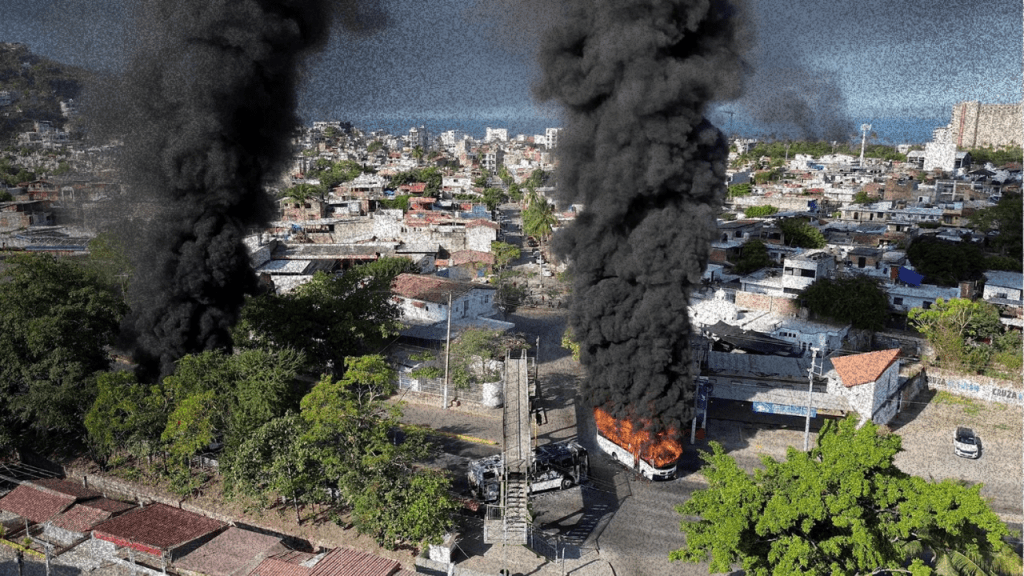
This spending is justified as security. The outcomes contradict the justification structurally. Strikes on civilian infrastructure in Iran produced mass civilian casualties. Gulf allies operating under U.S. defense architecture continued to absorb successful drone and missile strikes against airports and energy facilities. The promise is protection. What the system delivers is managed instability — which is not a failure of the security model but its operating condition. Instability sustains the budgets, the contracts, and the political coalitions that make the spending politically untouchable.
The Domestic Cost of US Military Spending Is Structural
The separation between foreign policy and domestic conditions is an ideological fiction. The same structural priorities that allocate $838 billion to the defense apparatus allocate correspondingly less to healthcare, infrastructure, housing, and public health. This is not coincidence. It is arithmetic operating inside a state whose institutional incentives are organized around force projection, not population welfare.
CDC National Vital Statistics data confirms U.S. life expectancy rebounded to 79.0 years in 2024 after collapsing to 76.5 years in 2021 — a COVID-era crash that exposed what chronic underinvestment had already built. The rebound does not erase the structural indictment. A system that requires a mass-casualty event to reveal how thin its domestic baseline is, and that frames the subsequent partial recovery as achievement, is not a system organized around population welfare. The COVID collapse was not an interruption of a healthy trajectory. It was a stress test that a well-resourced system should have absorbed without a multi-year life expectancy decline affecting millions.
Cuba — operating under six decades of U.S. blockade with a GDP per capita that is a fraction of America’s — sits in the same bracket. PAHO figures put Cuba’s 2024 life expectancy at 78.3 years against a U.S. figure of 79.0 — rough parity achieved under active economic warfare, with no access to the pharmaceutical supply chains the U.S. itself controls. That comparison does not require Cuba to be ahead to make its structural argument. It requires only that a blockaded socialist state with a fraction of U.S. resources produces comparable outcomes — which it does, by every available measure.
US Resource Allocation Works as Designed — Not Failing
The standard liberal analysis of U.S. decline frames what is documented above as dysfunction — a system that has lost its way, correctable by better leadership or smarter policy. That analysis is wrong at the structural level. The U.S. state is not failing to deliver domestic welfare because of incompetence. It is succeeding at delivering what it was built to deliver: returns on military contracts, projection of force to protect capital interests abroad, and the management of a global order that extracts value from the periphery toward the core. The domestic population absorbs the cost of that project. That is not a bug. It is the design.
China’s model, by contrast, rests its legitimacy on delivering material improvements to the population. The 14th Five-Year Plan’s metrics — life expectancy, air quality, renewable capacity, R&D output — are the report card the state is evaluated against. When those metrics are met ahead of schedule, the system is working as intended. When the U.S. burns $779 million in a single day of a war that produces civilian casualties and does not achieve stability, that system is also working as intended — for the beneficiaries of defense contracts and geopolitical dominance, not for the working population that funds it.
Which Model Produces a Society People Can Live In?
Every state makes tradeoffs. No system delivers on every dimension simultaneously. The point is not to idealize China’s model or deny its internal contradictions. The point is that the direction of resource allocation is visible, measurable, and consequential — and the two directions being compared here produce demonstrably different material conditions for working people.
One model expands renewable energy infrastructure at a pace reshaping global supply chains, meets life expectancy targets ahead of schedule, and directs state capacity toward the improvement of domestic conditions as a baseline function. The other sustains permanent military expenditure exceeding $800 billion annually, burns hundreds of millions in a single day of unresolved conflict, and returns home to a domestic sphere where the gap between what is possible and what is delivered grows with each budget cycle that treats the defense line as untouchable.
The choice between these models is not theoretical or distant. It is the question of what states are for, and what populations have the right to demand from the institutions that claim to represent them. One direction builds. The other burns resources maintaining a global order that produces neither stability abroad nor security at home. The 14th Five-Year Plan’s completed targets and a single day’s operational cost in the war against Iran are not talking points. They are the same argument, made from opposite ends of the same structural ledger.
Sources
- China National Health Commission — Life expectancy reaches 79 years in 2024, March 2025
- State Council Information Office — 14th Five-Year Plan achievements, August 2025
- IRENA — Renewable Capacity Statistics 2024
- Al Jazeera — How much could the Iran war cost the US?, March 2026
- U.S. Department of Defense — FY2026 Defense Budget Request Overview
- CDC / National Vital Statistics Reports — U.S. Life Expectancy 2024
- PAHO Health in the Americas — Cuba Country Profile, 2024
- Al Jazeera — U.S. strikes in Iran: civilian casualties, February 2026


 Spark Solidarity