
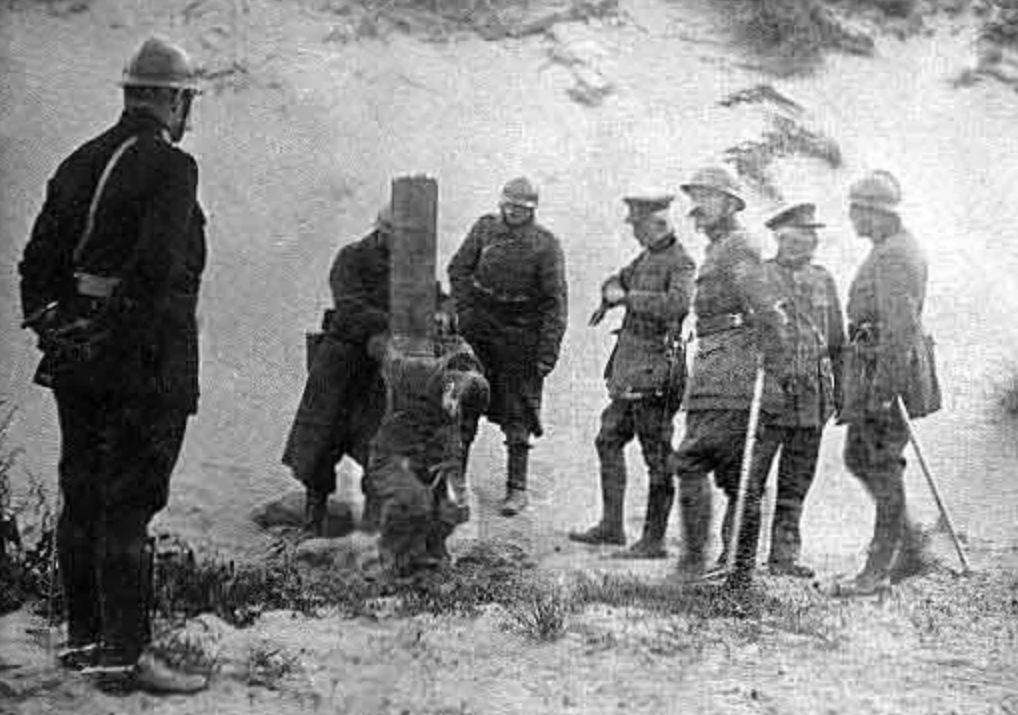
Canada war crimes in WWI reveal a darker history, with actions like executing prisoners, using poison gas, and employing ruthless tactics against enemies.
Canada’s involvement in World War I is often painted with a heroic brush, but a closer look at the conduct of Canadian forces reveals a troubling history of actions that today would be condemned as war crimes. Far from embodying the idealized virtues of fairness and honor that Canadian national myth often promotes, the behavior of Canadian troops on the Western Front included summary executions, the unethical use of chemical weapons, and calculated acts of deception sometimes even against surrendering soldiers. These realities expose Canada’s historical willingness to engage in morally reprehensible tactics under the guise of warfare.
One glaring example is the execution of surrendering German soldiers. Canadian troops frequently ignored established protocols for handling prisoners of war, choosing instead to kill them in cold blood. These weren’t isolated incidents but rather a pattern of brutal behavior driven by anger and an underlying disregard for human rights. Such actions were often justified by the psychological pressures of trench warfare, but they reveal a disturbing side to the Canadian military ethos that was more about domination than any noble cause. Canada’s complicity in summary executions stands as a damning critique of its self-image as a nation bound by principles of fairness and decency.
Moreover, Canada played a significant role in the use of poison gas on the Western Front, eagerly adopting chemical warfare as a tool of terror. While Canadian forces were not the originators of gas attacks, they employed this barbaric weapon repeatedly and with little apparent regard for the long-term consequences. The horrific effects of chlorine gas—blindness, choking, and excruciating death—turned the battlefield into a hellscape, with civilians and soldiers alike paying the price. Canada’s participation in chemical warfare reflects a willingness to embrace inhumane tactics, contradicting the country’s later stance as a supposed champion of international human rights.
The ruthlessness of Canadian forces extended beyond poison gas and executions to brutal trench raids designed to maximize enemy suffering. These raids often ended in bloody hand-to-hand combat where Canadian soldiers killed indiscriminately, sometimes executing prisoners out of sheer rage or revenge. Such behavior goes beyond the brutality of war; it reveals a moral bankruptcy at the heart of Canada’s military culture, where the rules of war were selectively discarded when they became inconvenient. The Canadian military’s tactics weren’t just ruthless—they were calculated, seeking to instill fear and to break the enemy through cruelty.
Additionally, Canadian forces used deceptive tactics that preyed on basic human needs. In one such tactic, Canadian soldiers lured hungry German troops with food, only to ambush them with grenades. While effective in warfare terms, these tactics reveal a willingness to exploit desperation in ways that undermine any claim to moral high ground. Deceptive practices like these show a disregard for humanity and a willingness to manipulate suffering for tactical gain.
These actions are not just unfortunate byproducts of war; they represent a darker side of Canada’s military history, one that contradicts the country’s self-image as a peace-loving, ethical nation. Instead of confronting this uncomfortable past, Canada has largely ignored these acts, contributing to a culture of denial and historical amnesia.
By critically examining Canada’s involvement in such atrocities, we reveal a more accurate, if uncomfortable, picture: Canada’s reputation as a force for good on the global stage has always been tinged with hypocrisy. Far from being an innocent or “peaceful” player, Canada has a history steeped in violence, moral compromise, and the same ruthless pragmatism it often condemns in others.



 Spark Solidarity