Two people did not simply die in a crash. They died during an SQ police pursuit over an alleged breach of conditions.
According to the Bureau des enquêtes indépendantes, an SQ patrol car noticed the vehicle at around 1:11 a.m. on June 10, 2026. By around 1:13 a.m., the vehicle had gone into a body of water. Two people were pulled from the river with serious injuries and later pronounced dead in hospital. That is the fatal timeline as the public knows it so far: roughly two minutes between police contact and two deaths.
The official language is cautious. The BEI says the vehicle’s owner was allegedly in breach of conditions, that police attempted to intercept the vehicle, and that the driver lost control. That caution is legally predictable at the beginning of an investigation. But the public question does not need to wait for every technical reconstruction detail before it becomes visible. The question is not only why the driver fled. The question is why police turned an alleged breach of conditions into an intervention that ended with two people dead in the Rivière Delisle.
The Official Timeline Is Damning
The BEI opened an independent investigation around 4 a.m. on June 10 into an intervention involving the Sûreté du Québec in Coteau-du-Lac, in the Montérégie region. The BEI’s preliminary account says that around 1:11 a.m., an SQ patrol car noticed a vehicle whose owner was allegedly in breach of conditions and attempted to intercept it. Around 1:13 a.m., the driver reportedly lost control and the vehicle ended up in a body of water. Two people were removed from the river with serious injuries, transported to hospital, and pronounced dead there.
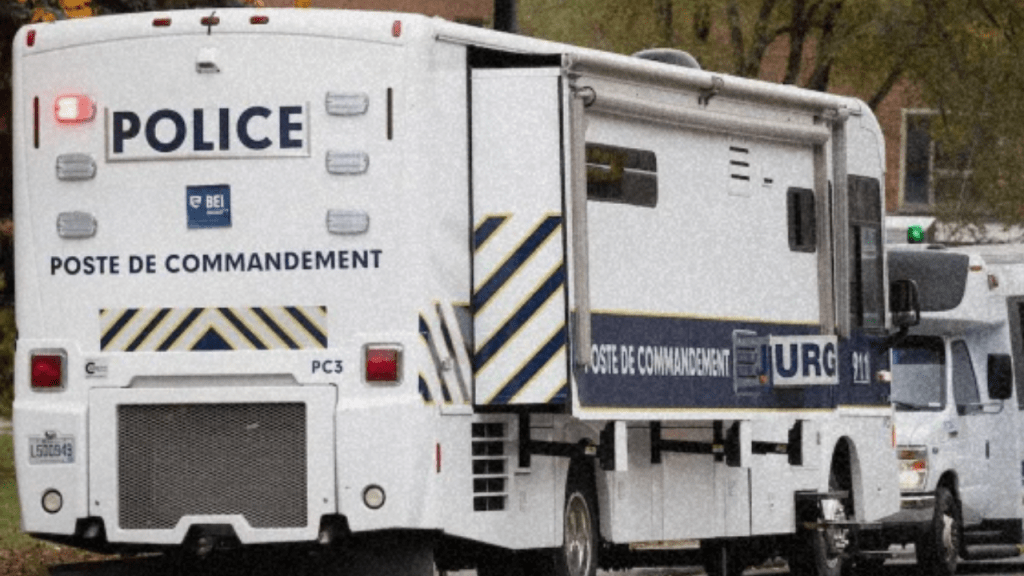
The BEI assigned seven investigators to the case. CityNews reported that the BEI requested support from the Service de police de la Ville de Montréal. The BEI’s role matters because the deaths occurred during a police operation, not in a private traffic incident detached from state action.
That classification changes the frame. This is not just a story about a driver, a road, and a crash. It is a story about a police intervention. The SQ’s decisions, timing, radio communications, vehicle position, speed, and pursuit conduct are not side issues. They are the public issue.
The compressed timeline makes the case even more alarming. A police encounter that moves from attempted interception to fatal river crash in roughly two minutes is not a slow, uncontrollable drift toward tragedy. It is a rapid escalation. That does not automatically prove criminal wrongdoing by any officer. But it makes the police decision to initiate and continue the intervention the central question.
The Trigger Was Not an Active Attack
The known public record does not describe police responding to an active shooting, an abduction, a murder in progress, or an immediate threat to life. The initiating issue, according to the BEI, was an alleged breach of conditions. TVA/Agence QMI reported that officers checked the plate of a BMW and believed the driver was under a court-ordered curfew. It was around 1:15 a.m., so police reportedly believed he was violating that condition.
A breach of conditions can be legally serious. Conditions are imposed by courts and are enforceable. But legality is not the same as proportionality: whether police had a lawful reason to investigate or stop someone does not settle whether a dangerous vehicle intervention was justified once the situation escalated.
Police power is often defended by collapsing these questions into one. If there was a legal basis for the stop, the chase becomes the driver’s fault. If the driver had conditions, the death becomes a consequence of his own choices. If police had grounds to act, the public is told to stop asking whether the way they acted created unnecessary danger.
That logic protects the institution. The original reason for police interest and the later danger created by pursuit are separate questions. A curfew breach may justify investigation. It does not automatically justify turning a dark rural road into the scene of a fatal chase.
The Chase Is the Real Issue
Media coverage of police pursuits often begins with the phrase “fleeing police.” That phrase does a lot of political work. It puts the driver’s decision at the beginning, middle, and end of the story. It turns the police role into a passive backdrop. Police are simply “there.” The driver “flees.” The crash “happens.” But police pursuits are not weather events. They are tactics. They are decisions. They involve discretion.
Police do not control every action of a person behind the wheel. But they do control whether they activate lights, whether they attempt an interception, whether they follow, how closely they follow, whether they communicate with a supervisor, whether they disengage, and whether the original enforcement objective remains worth the risk. Once a vehicle accelerates, the police decision changes. It is no longer only a stop. It is a risk calculation.
Quebec police ethics guidance makes that risk question unavoidable. During a pursuit, officers are expected to keep assessing whether the danger has become serious enough to end the chase. The same guidance describes police pursuits as exceptional and as a last resort, weighing factors including the nature and seriousness of the offence, weather, pedestrian presence, traffic density, risk zones, passengers in the vehicle, and the characteristics of both vehicles.
That standard matters here because the public timeline moves from attempted interception to fatal river crash in roughly two minutes. The question is not whether the driver made dangerous choices. The question is whether police helped produce a danger that was disproportionate to what they were trying to enforce.
A person can flee irresponsibly and police can still be wrong to pursue. A person can have pending charges and police can still create an unjustifiable risk. A stop can have a legal basis and still become reckless when the danger changes.
The public does not need a morality play about a “bad driver.” It needs an accounting of state power. What did officers know at 1:11 a.m.? What offence did they believe justified intervention? When the vehicle accelerated, what risk assessment was made? Was the pursuit called in? Was a supervisor involved? What speed did the police vehicle reach? How close was the SQ vehicle when the BMW left the road? Did police consider backing off? Those are not technicalities. Those are the difference between accountability and a press release.
The Scene Made the Danger Concrete
TVA reported that officers attempted to intercept a grey BMW on chemin de la Rivière-Delisle-Nord, near Highway 20. The road was described as a small, winding rural road with a posted speed limit of 50 km/h. After police activated their emergency lights, the BMW reportedly accelerated. Roughly two minutes later, the driver lost control, struck railway rails near the roadside, and the rails acted like a launch ramp. The car reportedly flew more than 50 metres before landing upside down in the Rivière Delisle under a small bridge.
Those details matter because pursuit risk is not abstract. It is geographical. It is physical. It is made of curves, darkness, water, bridges, roadside infrastructure, speed, reaction time, and the bodies inside the vehicle. Police pursuit policy cannot be judged only from the perspective of what police wanted. It must be judged against the environment into which police introduced danger.
A small rural road near a river is not an empty test track. A car fleeing at speed on that road does not create danger only for the driver. It creates danger for passengers, other motorists, residents, and anyone unlucky enough to enter the path of the chase.
The fact that the vehicle ended up in the river does not by itself prove officers could foresee that exact outcome. They did not need to foresee the precise angle of impact or the precise role of the railway rails. The broader danger was foreseeable the moment a vehicle accelerated on a rural road at night with police behind it. That is why “the driver lost control” is not a sufficient explanation. Losing control is one of the predictable outcomes of high-risk flight.
The Passenger Is Almost Erased
There were two people in the vehicle. Public attention has already focused on the driver. TVA identified him as 18-year-old Mohammed Yassin Cherfaoui of Laval. The passenger, at the time of that reporting, had not been publicly identified. Even basic information about the passenger remained unknown.
That absence is not incidental. In police pursuit narratives, passengers often disappear into the category of the suspect vehicle. Everyone inside the car becomes part of one fleeing object. The driver is criminalized. The passenger becomes collateral. Their agency, fear, confusion, and lack of control vanish.
But the passenger did not steer the car. The passenger did not decide whether police activated their lights. The passenger did not control the SQ’s response. The passenger may not have known why police were attempting the stop, may not have understood the alleged breach of conditions, and may have had no meaningful ability to get out, slow the vehicle, or prevent the driver from accelerating.
That is why pursuit deaths cannot be treated as private consequences for the person behind the wheel. Police pursuits place everyone nearby into the enforcement zone. The passenger was not the target of the alleged condition breach. Yet the passenger died too. A serious investigation has to account for that person as more than a second fatality in a sentence. Their death is part of the proportionality question. What enforcement objective justified exposing a passenger to this level of danger?
Criminalization Narrows the Story
TVA reported that the driver was known to police, was awaiting trial in two separate files, and had been released with conditions after arrests earlier in 2026. Those details may explain why police were interested in the vehicle. They do not answer the central question.
Pending allegations are not convictions. More importantly, even a person with a record does not become outside the protection of public safety. Police do not get to treat risk differently because the person at risk has already been marked as disposable.
This is how criminalization works after police-involved deaths. The dead person’s past is placed in the foreground. Their charges, conditions, associations, and alleged conduct become the atmosphere around the death. The reader is nudged toward a conclusion before the investigation has produced one: he was already in trouble, so what happened was inevitable.
But nothing about pending charges tells us whether a pursuit was necessary. Nothing about a curfew condition tells us how fast the SQ vehicle was travelling, how close it was, what officers communicated, or whether they could have disengaged. Nothing about the driver’s alleged history explains why a passenger ended up dead in a river. The criminalization frame is useful for police because it makes the victim’s biography stand in for the institution’s decision-making. It asks the public to judge the dead instead of examining the living system that pursued them.
The BEI Process Is Not Enough
The BEI investigation is necessary. It is not sufficient. The BEI conducts investigations when, during a police intervention or while someone is detained by police, a person other than an on-duty police officer dies, suffers serious injury, or is injured by police gunfire. Its involvement confirms that this death belongs to the category of police intervention, not ordinary accident reporting.
But the existence of a BEI investigation should not be mistaken for public accountability. The process gathers evidence, interviews officers and witnesses, reconstructs events, and sends files onward through official channels. Much of that material may never become public. Police statements, radio communications, reconstruction data, officer notes, and internal decision-making can remain hidden behind procedural walls. That matters because the most important questions in this case are not answered by the fact of an investigation. They have to be forced into the public record.
Did SQ officers identify the driver or only the vehicle owner? What exact condition did they believe had been breached, and was it confirmed before the attempted stop? Did officers know there was a passenger? When the BMW accelerated, was the intervention treated as a pursuit, and what speeds were reached?
How close was the SQ vehicle when the BMW crashed? Was a supervisor notified, and did officers consider terminating the pursuit? Were there dashcams, body cameras, or nearby surveillance? What does the vehicle data and radio traffic show? These questions are not anti-investigation. They are the minimum standard for taking the investigation seriously.
This Is a Pursuit-Policy Problem
Police pursuit deaths are often treated as a series of isolated tragedies. Each case is narrated around the driver who fled. Each crash is individualized. Each dead person is separated from the next by location, date, and circumstance. That framing protects the institution. The better category is not “bad drivers who crashed.” The better category is deaths produced during police vehicle interventions.
KillerCopsCanada has placed this Coteau-du-Lac death alongside other recent deaths involving SQ police pursuits or attempted interceptions in Quebec. That broader pattern matters because the tactic is repeatable. Police agencies know pursuits are dangerous. They know people panic. They know speed changes everything. They know passengers and bystanders can be killed. They know that a pursuit begun over one kind of alleged offence can quickly create a danger far greater than the offence itself. That is the institutional issue. The state cannot claim surprise every time a pursuit ends in death. The danger is built into the tactic.
When the alleged trigger is not an immediate threat to life, the threshold for pursuit should be extremely high. Police should have to justify not only why they wanted the person stopped, but why stopping the person at that moment, in that way, on that road, under those conditions, was worth the danger created.
That standard should not be controversial. It is basic public safety. If police can create a life-threatening chase over an alleged breach of conditions, then the public needs to know where the limit is. If two deaths in a river do not force that question, the limit may not exist in practice.
The Story Is Proportionality
The official story will likely continue to move through familiar stages: preliminary facts, BEI investigation, reconstruction, prosecutorial review, possibly a coroner’s process, maybe a short public summary months or years later, maybe no charges, maybe no meaningful policy change. That cycle is part of the problem. The public is expected to wait quietly while the institution that produced the danger is translated into procedure. But the basic political question is already visible: what was the SQ trying to enforce, and what danger did it create by trying to enforce it?
The answer matters beyond this one case. Police power always presents itself as reactive. It says it is responding to disorder, flight, breach, suspicion, non-compliance. But police also create situations. They escalate. They introduce pressure. They transform conditions. In Coteau-du-Lac, an alleged breach of conditions became a police intervention. A police intervention became a vehicle flight. A vehicle flight became a crash into a river. Two people died.
The final investigation may determine whether any officer violated law or policy. But public accountability cannot be reduced to that narrow question. The deeper issue is whether police should be allowed to create this kind of risk for this kind of enforcement objective in the first place.
Two people are dead. One was an 18-year-old driver. One was a passenger whose public story has barely begun. Their deaths should not be buried under the phrase “fleeing police.” They should force a direct confrontation with the tactic that made the crash possible. The question is not only why the driver fled. The question is why police made an alleged condition breach worth a chase that ended with two people dead in a river.
Sources
- Le BEI annonce le déclenchement d’une enquête à Coteau-du-Lac — Bureau des enquêtes indépendantes
- Investigation file BEI-260610-001 — Bureau des enquêtes indépendantes
- Deux décès à Coteau-du-Lac — TVA Nouvelles / Agence QMI
- Two dead after vehicle ends up in river allegedly while fleeing SQ — CityNews Montreal
- La conduite d’un véhicule d’urgence — Commissaire à la déontologie policière