Vancouver’s FIFA Human Rights Action Plan does not stop the bylaw sweeps. It commits to continuing them inside a zone that contains the Downtown Eastside.
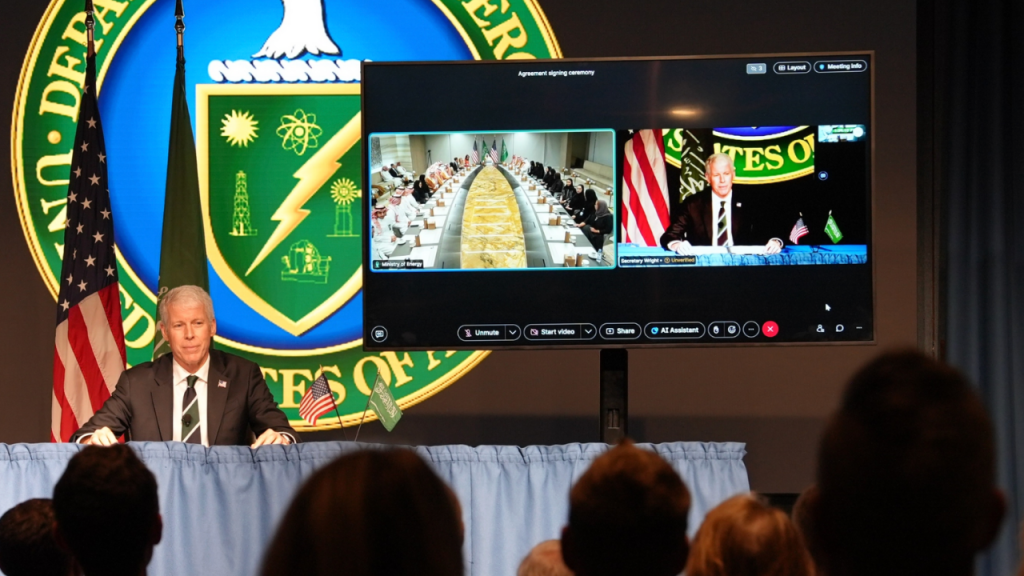
On Monday, May 25, 2026, the City of Vancouver released the final version of its FIFA World Cup Human Rights Action Plan — the document FIFA requires every 2026 host city to produce. The plan addresses worker rights, sex worker safety, child protection, and displacement of unhoused people. It launched at a city hall media event nineteen days before Vancouver’s first match at BC Place. Deputy city manager Sandra Singh, asked about bylaw enforcement during the tournament, told reporters that day-to-day bylaw compliance work would continue. The plan permits sheltering in parks overnight. Daytime structures must be removed.
The phrasing is bureaucratic. The mechanism is not. Existing Vancouver bylaws already require bylaw officers to clear sidewalks and parks of structures during the day, and Pivot Legal Society lawyer Laura Macintyre has described what that looks like operationally — city workers and police sweep the Downtown Eastside every morning, demanding unhoused residents relocate. The Human Rights Action Plan formalizes that the tournament does nothing to interrupt this. The plan does not promise no displacement. It promises the displacement already happening will continue at the same cadence through the tournament, including inside the FIFA security perimeter.
The bubble zone and what it contains
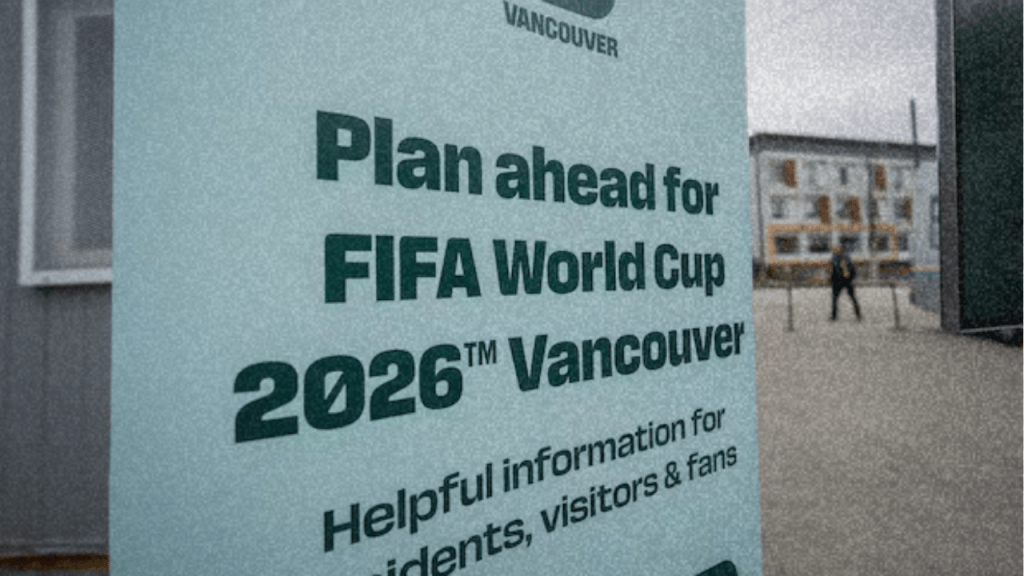
FIFA requires each host city to designate a “controlled area” around its stadium for the tournament. In Vancouver, that area is a two-kilometre radius around BC Place. The zone runs from Strathcona west to the Burrard Bridge, from the harbour south to about West 12th Avenue. A second 100-metre zone covers the Pacific National Exhibition in East Vancouver. Together they cover Yaletown, Gastown, Chinatown, the False Creek condos, and the entire Downtown Eastside — the same radius containing Canada’s most expensive real estate and its most concentrated unhoused population.
Inside the bubble zone, a temporary FIFA World Cup 2026 Bylaw amends seven city bylaws. New rules limit street vending, restrict noise, control advertising display, and increase fines. The city’s stated reasons: “public safety, brand protection for the event’s corporate sponsors, smooth city logistics and operations.” The bylaw applies May 13 to July 20, 2026. Building Bylaw amendments started January for temporary event structures. None of this is discretionary on Vancouver’s part — FIFA requires it of every host city. None is presented as displacement infrastructure. All of it functions as displacement infrastructure inside the zone.
What the advocates have been saying
In late February, the BC Poverty Reduction Coalition and other DTES organizations held a town hall attended by roughly 150 residents. Co-director Chantelle Spicer told the crowd that “displacement is definitely coming.” She pointed out that the draft plan’s protections applied only to existing overnight-sheltering rules in parks, not to sidewalks or daytime activity. Pivot Legal Society lawyer Laura Macintyre, speaking at the event, explained the new temporary FIFA bylaw — what was changing, where, for how long, what the new penalties would be. Macintyre’s framing has been consistent. “FIFA is an engine for displacement, criminalization and discrimination.”
Sarah Blythe, executive director of the Overdose Prevention Society, described the Downtown Eastside as “in a crisis situation” to Daily Hive. On the day before the interview, she said, the neighbourhood saw eight drug overdoses. Athena Pranteau, a DTES outreach worker, told the Globe and Mail that residents are afraid because they don’t know where they’ll be sent or what will happen during match days, and that there is “no concrete plan.” The city’s response: funding daytime shelter spaces at five existing locations, as respite space for unhoused people to watch the matches.
The Olympics the city declined to learn from
Vancouver has hosted a mega-event before. The 2010 Winter Olympics. Three years before those Games opened, in June 2007, a Pivot Legal Society lawyer named David Eby travelled to Geneva to address a UN conference on housing rights. Eby — now Premier of British Columbia — testified that Vancouver had not met its housing commitments. He cited reductions in athletes’ village social housing, “Project Civil City” bylaws prohibiting sitting or lying on sidewalks, increased beat policing, increased surveillance cameras, and the displacement those measures would produce in the Downtown Eastside. The city denied the assessment.
The assessment was correct. Anti-poverty advocates documented continued displacement around the 2010 Games, intensified DTES policing, and a deepening housing crisis that has not abated in fifteen years. The city’s current FIFA plan declines to reference 2010 directly. City staff told reporters the 2010 Olympics are not a useful template because the format of seven World Cup matches differs from a multi-week winter games. The format does differ. The displacement pattern does not. The Pivot lawyer who warned about 2010 from a UN platform is now the premier presiding over a housing crisis deepened by the precedent he predicted.
The Human Rights Action Plan as documentation
FIFA’s framework requires host cities to produce these plans for the first time in tournament history. Jennifer Li, director of the O’Neill Institute’s Center for Community Health Innovation at Georgetown Law and national coordinator of the Dignity 2026 Coalition advising FIFA, has summarized the framework’s limits. “The plan is just a plan. It’s not self-executing.” Several US host committees missed the March deadline for first drafts. FIFA extended its timeline. The frameworks function less as binding constraints than as documents host cities produce, file, and then operate around exactly as they had planned to.
Vancouver’s plan does the same work. It acknowledges the DTES sits adjacent to the venue and that “significant concern” exists. It commits to funding daytime shelter spaces during match days. It promises to continue services at existing levels. It does not commit to halting bylaw enforcement. It does not commit to halting sweeps. It does not commit to housing anyone. The deputy city manager’s “day-to-day bylaw compliance will continue” is not a deviation from the plan. It is the plan. The Action Plan is what permitting existing displacement under FIFA branding looks like as formal document.
The price tag and what it pays for
The cost of Vancouver’s FIFA participation, given by former NDP minister Lana Popham in 2025, is up to $581 million. Successor Spencer Chandra Herbert has promised a budget update by end of June. Vancouver will host seven matches between June 13 and July 7, 2026, on a natural-grass and synthetic hybrid pitch at BC Place. An estimated 350,000 fans will pass through during the tournament. Sim has called the matches a once-in-a-generation hosting opportunity. What does not have a $581-million budget line is permanent housing, expanded overdose prevention, or treatment for those Blythe says are dying eight per day.
The financial asymmetry is the substantive answer the city has given to the human rights question. Public money is mobilizable at scale for a four-week tournament. It is not mobilizable at scale for the chronic crisis the tournament sits on top of. The Action Plan articulates the difference administratively: services for unhoused residents stay at existing levels, while FIFA-specific lines fund stadium upgrades, security, brand enforcement, and shelter spaces designed to keep unhoused residents indoors during matches. The framework names this protection of human rights. In effect it produces a managed-visibility plan.
What hosting looks like from inside the zone
The international history of host-city displacement is consistent enough that Pivot Legal describes it as a “playbook.” Seoul moved 720,000 people for the 1988 Olympics, per the Centre on Housing Rights and Evictions. Beijing displaced 1.5 million for 2008. London erased Clays Lane housing for 2012. Rio displaced tens of thousands across the 2014 World Cup and 2016 Olympics. South Africa pushed informal traders out of FIFA zones in 2010. The mechanism is the same — the spectacle requires a city that appears to have dealt with its poverty, and the political class delivers by managing where the poor exist.
Vancouver is doing nothing exceptional. It is doing what host cities do, with the same framework, the same advocacy critique, the same official denials, the same financial pattern. What is exceptional is the formal documentation. The Action Plan is the city stating in writing, before the tournament, that it knows the displacement risk and has decided to continue the enforcement regime anyway. The plan replaces what would once have been an off-camera operational decision with an on-camera administrative document. The displacement is the same. The accountability infrastructure is what FIFA’s framework produced in its place.
From June 13 to July 7, the cameras will be on the matches. From May 13 to July 20, the bylaws will be enforced. In the two-kilometre zone, daytime sweeps will clear sidewalks and parks of the people who live on them. Sarah Blythe will continue counting overdoses in the Downtown Eastside — eight on the day she spoke to a reporter at the end of May. The city will tell visitors and international press that Vancouver is one of the best host cities. The plan it published on May 25 is what lets both things be true at once.