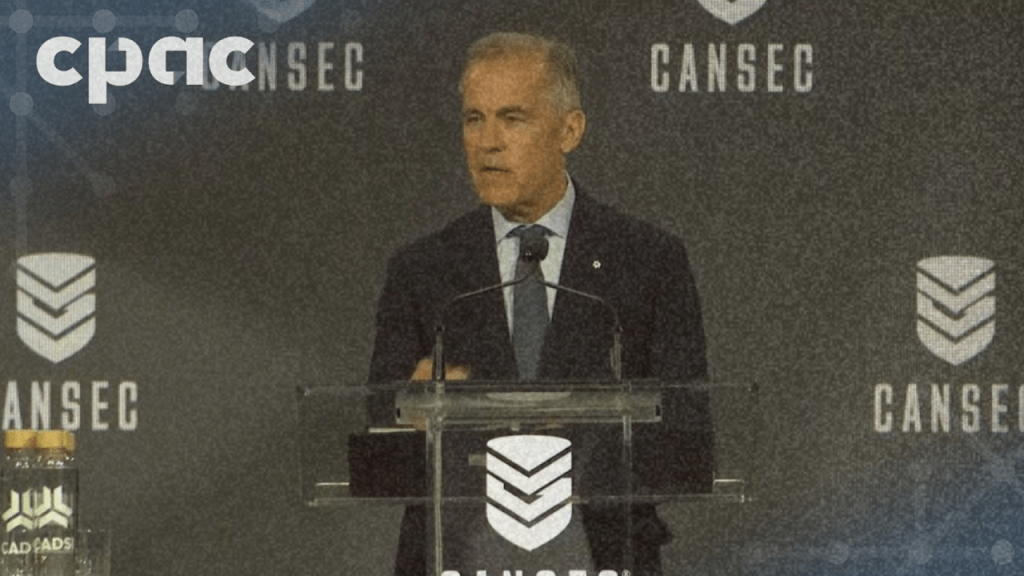
Mark Carney delivered the first-ever Canadian Prime Minister keynote at CANSEC on May 27, and put Canada on a path to 5% of GDP defence spending.
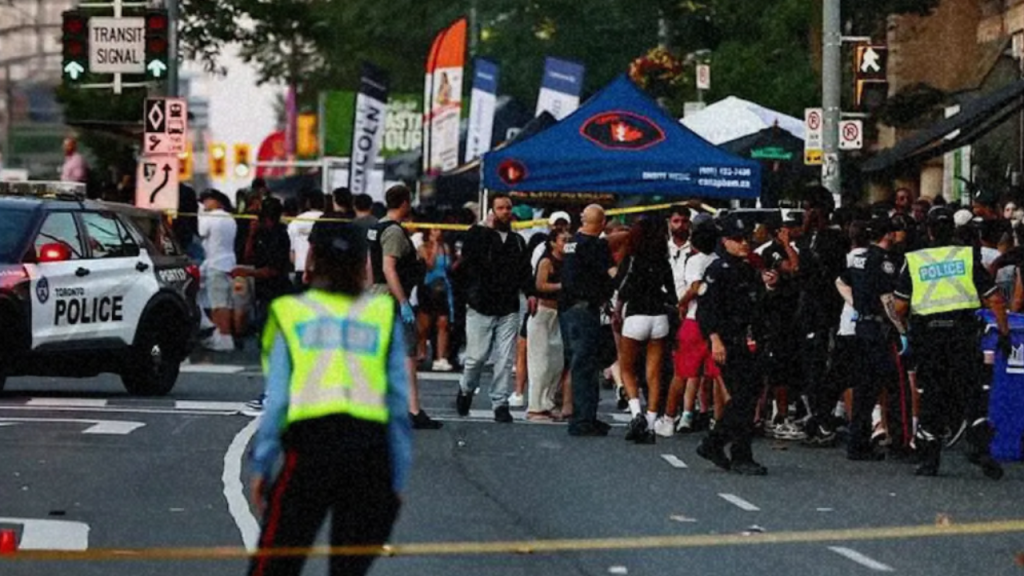
At 7 a.m. outside Ottawa’s Cohere Centre, protesters gathered at the entrances to CANSEC 2026, Canada’s largest arms and defence trade show. They blew whistles, banged drums, carried banners naming Palestinian children killed in Gaza, and confronted delegates as they entered the convention centre. Inside, military contractors, government officials, foreign delegations, police-linked security firms, AI companies, naval technology firms, aerospace manufacturers, and political leaders moved through the country’s most important weapons marketplace. Outside, demonstrators called it what it was: a place where war becomes business.
The coalition outside had been organizing the mobilization for weeks. Shut Down CANSEC, the Palestinian Youth Movement, Migrante Canada, World Beyond War Canada, Labour 4 Palestine, the International Coalition for Human Rights in the Philippines, and Peace Brigades International-Canada. Canadian Friends Service Committee Quakers held a silent vigil. Rosie Lucente of Shut Down CANSEC told the Ottawa Citizen that every deal made at CANSEC was a death sentence for colonized and working people. A few hours later, Mark Carney’s motorcade arrived. Defence Minister David McGuinty walked to the podium. Carney followed him onto the stage and opened with a fact.
The first PM at the lectern
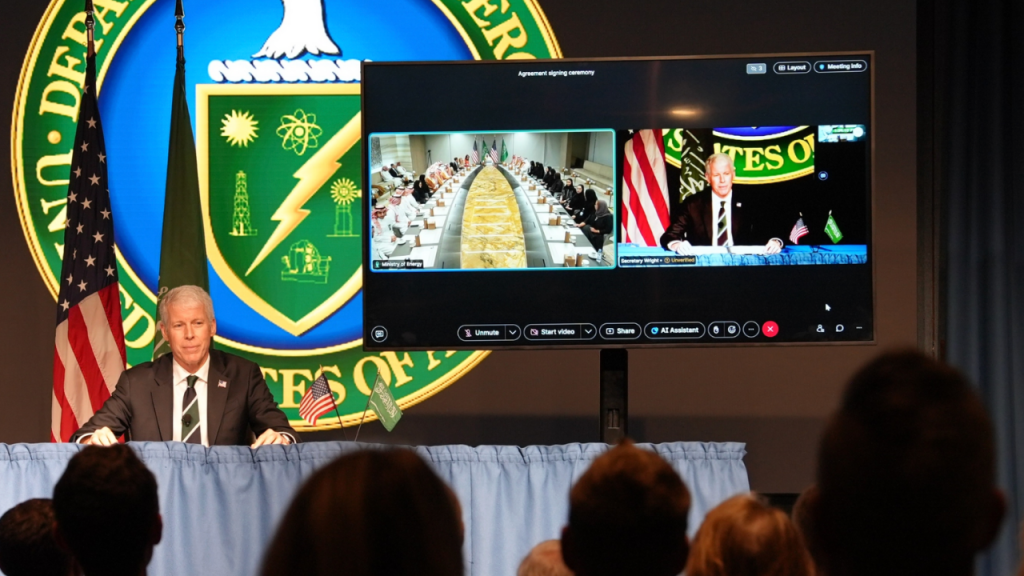
This was the first time a Canadian Prime Minister had delivered the CANSEC keynote. CADSI has hosted the trade show since 1998 and every previous keynote had been given by a Defence Minister or a Procurement Minister. CADSI president Christyn Cianfarani sat in the room. Carney told the audience Canada had hit NATO’s 2% of GDP defence target ahead of schedule, was working toward 3.5% by 2035, and had already provisioned in the fiscal framework for 4% by the end of the decade. He committed Canada to additional provisions to achieve NATO’s 5% target on or ahead of schedule.
The ten-year package: $180 billion in direct defence procurement, $290 billion in defence and security-related infrastructure, $125 billion in downstream economic benefits. Defence sector revenues projected to grow 220%, exports 50%, the industry to add 125,000 new jobs to its existing 80,000. The Defence Investment Agency now centralizes federal procurement. A Defence, Security and Resilience Bank is in development with NATO allies to mobilize low-cost financing. Canada has become the first non-European country to join the EU’s Security Action for Europe procurement initiative. A new 90-day approval standard cuts procurement timelines.
The procurement announcement came at the end. Canada has entered negotiations to buy Saab’s Airborne Early Warning & Control Aircraft, built on Canadian Bombardier Global 6500 jets, at 3,000 aerospace jobs and at least forty aircraft over fifteen years. The platform’s existing operators, Carney specified at the podium, are France, Sweden, and the United Arab Emirates. The UAE was among the customers the coalition outside the building was naming. The Prime Minister named the same customer list inside.
The CADSI–Kraken–Elbit network
CANSEC is hosted by CADSI, whose board of directors draws from the industry the event exists to promote. Board member Bernard Mills became EVP Defence at Kraken Robotics on January 12, 2026, per Kraken’s December 2025 announcement. Kraken is a Canadian marine technology firm specializing in sonar and autonomous naval systems. In 2022 Kraken’s KATFISH towed synthetic aperture sonar was demonstrated integrated with Elbit Systems UK’s Seagull uncrewed surface vessel at a Royal Navy demonstration. Canadian sonar, Israeli uncrewed vessel, UK Royal Navy host.
Elbit Systems is not an outlier in CADSI’s 700-plus membership. The list includes Amazon Web Services, BAE Systems, Bell Textron Canada, Boeing, Cisco Systems Canada, Colt Canada, Elbit Systems Ltd., General Dynamics, L3 Harris, Leonardo DRS, Lockheed Martin Canada, Microsoft Canada, and Rheinmetall Canada. On May 22, five days before Carney’s keynote, the International Centre of Justice for Palestinians Canada and Just Peace Advocates formally asked the Canada Border Services Agency to deny entry to representatives of Elbit Systems and Israel Aerospace Industries. CBSA did not act. Both companies’ technologies were on the floor at CANSEC, as they have been for years.
$470 billion, against $1.9 billion for pharmacare
The numbers Carney delivered from the keynote stage sit against a contrast organizers have been making since the federal Pharmacare Act received Royal Assent in October 2024. That Act funds a first phase covering only contraception and diabetes medications, conditional on bilateral agreements with provinces and territories. The Parliamentary Budget Officer costed it at $1.9 billion over five years. The numbers from Carney’s CANSEC speech: $180 billion in defence procurement, $290 billion in defence infrastructure, over ten years. Roughly $470 billion total. Against $1.9 billion for the start of universal pharmacare.
The comparison is not the arithmetic. It is the velocity. Pharmacare requires bilateral agreements with every province, eligibility specifications, formulary work, phased rollout — the federal government has been clear the rest of the plan follows only as the negotiations conclude. The Defence Investment Agency Carney announced exists to compress timelines by removing the duplicate-approval bottlenecks the same finance ministry accepts as routine in health policy. The finance ministry has one speed for weapons and a slower one for medicine.
Ford and the day after
On the morning of May 28, Ontario Premier Doug Ford spoke at CANSEC and unveiled Ontario’s own provincial Defence Industrial Strategy. CPAC carried the remarks. The Ontario strategy runs parallel to the federal Defence Industrial Strategy Carney’s government launched in February 2026, structured to capture provincial industrial development from the federal procurement pipeline Carney had announced the day before. Ontario’s manufacturing base, aerospace cluster, automotive supply chains, and university-linked tech sector position the province as the largest provincial beneficiary of the trajectory.
Carney and Ford represent the federal Liberal and Ontario Progressive Conservative sides of a bipartisan defence consensus. Carney’s framing was sovereignty and Arctic security. Ford’s was jobs and industrial competitiveness. Both arrived at the same procurement pipeline. Neither speaker addressed the protest at the perimeter. Neither addressed the May 22 request to CBSA. The two government heads who delivered the trade show’s keynote programming did it across two days without acknowledging the people standing outside the building.
The media access question
CADSI’s accreditation policy treats CANSEC as a private event and reserves the right to deny press accreditation case-by-case, with decisions final. Ricochet was denied access to CANSEC 2026 on the grounds the outlet did not meet CADSI’s eligibility requirements. The Maple reported that multiple independent journalists and outlets, including The Maple itself, were denied accreditation. The Breach was denied in 2023 after publishing critical reporting on Canadian military bases, Saudi arms exports, and Canadian bank loans to Elbit Systems.
Carney’s remarks ran on CPAC. The PMO press office sent the speech transcript out that evening. The Saab GlobalEye announcement was a press release event. What was lost in the exclusion of critical outlets was the side material — the conversations on the floor, the composition of the foreign delegations, the contracts being negotiated between exhibitors and procurement officers, the names of the people moving through the building. The federal government is comfortable having that material reported only by the outlets CADSI clears.
The morning after the perimeter
By Friday morning the booths were being packed up. Foreign delegations were on flights home. The procurement officers had returned to the Defence Investment Agency to begin the contract work Carney had announced. The first-ever Canadian PM keynote at CANSEC produced $470 billion in commitments over ten years, the Saab GlobalEye deal with the UAE in its customer base, a defence-industrial bank in development with NATO allies, and the path to 4% then 5% of GDP on defence. The protesters at the perimeter on Wednesday morning had been describing accurately what was being announced inside.