
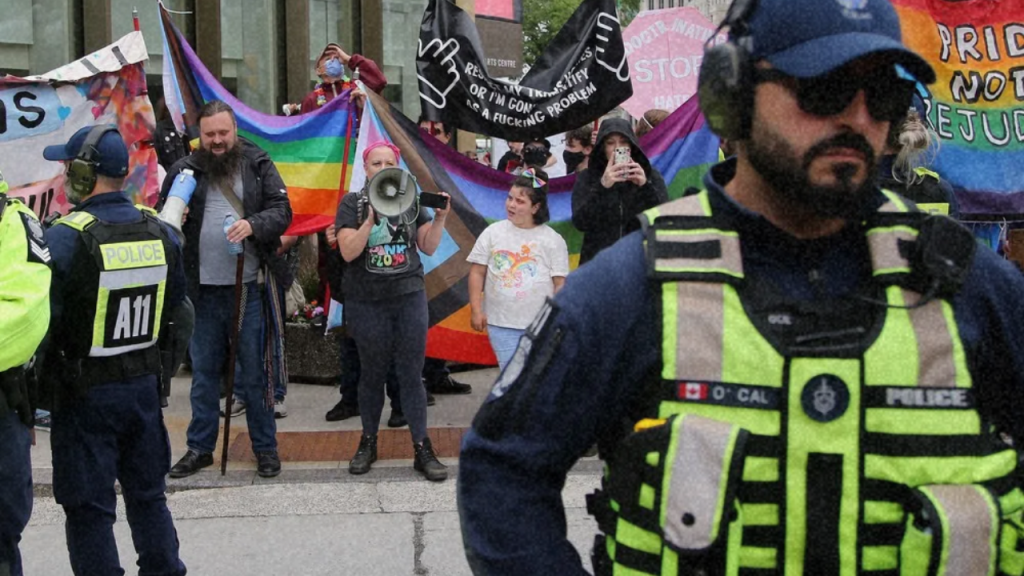
Safe protest became the default because institutions reward compliance, manage risk, and turn dissent into ritual.
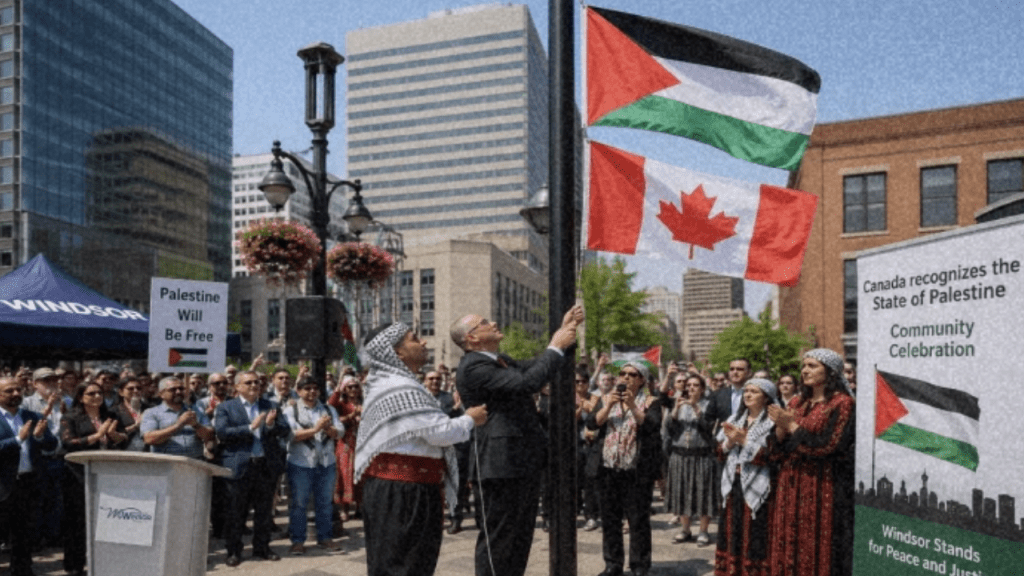
At a permitted protest, the route is known before the march begins. Police know the assembly point, the endpoint, the marshals, the likely chants, and the time the crowd is expected to disperse. The city absorbs the disruption before it happens. Dissent appears in public, passes through managed space, and leaves behind images that can circulate without forcing a material concession.
Safe protest did not become the default because participants lost sincerity. It became the default because institutions learned how to reward protest that remains legible, contained, and low-risk. Funding structures reward predictability. Media systems reward spectacle. Police planning rewards advance disclosure. Legal systems punish disruption. Movements internalize the cost of escalation.
The result is not the disappearance of dissent. It is the production of a protest form that can be recognized, praised, photographed, and ignored.
The nonprofit form sets limits
The nonprofit form changed how dissent is organized. Movements once rooted in workplaces, neighborhoods, campuses, churches, tenant networks, and informal formations are now often mediated through organizations with staff, boards, grants, insurance, communications strategies, and donor relationships. The structure does not need to corrupt every participant. It only needs to make risk institutionally expensive.
INCITE!’s work on the nonprofit industrial complex described how foundation and state funding can absorb radical movements into professional structures that reward stability over confrontation. INCITE! described that lesson through its own organizing history, after concluding that foundation money could create forms of co-optation similar to state funding.
Funding cycles require deliverables, measurable outcomes, reputational safety, and continued access to institutional partners. Disruptive action introduces uncertainty. Arrests threaten staff. Escalation threatens insurance, venues, donors, partnerships, and future grants. What looks like tactical moderation is often a rational response to the material conditions under which professional activism survives.
Protest becomes shaped by what is fundable. A campaign can hold a rally, issue a statement, convene a panel, produce a report, and document community engagement. Actions that impose direct costs on power are harder to fit into grant language. The boundary of acceptable protest is set before the crowd enters the street.
Careers discipline risk
Professional activists live inside the same labour market as everyone else. Jobs, references, contracts, public legitimacy, and future opportunities depend on remaining acceptable inside a narrow political ecosystem. Risk is not abstract when a staff member can lose income, immigration security, institutional access, or professional standing.
This produces a practical form of discipline. Safety becomes framed as responsibility. Escalation becomes recklessness. Confrontation becomes a liability imposed on the organization. Over time, risk avoidance hardens from a tactical choice into workplace culture.
The logic is stronger because it can be defended in caring language. Organizers are told to protect vulnerable people, reduce exposure, avoid charges, preserve relationships, and keep the campaign alive. Those concerns are often real. They also create a politics where the safest action becomes the only action an organization can officially endorse.
Media turns protest into image
Media systems add another layer of discipline. Protest increasingly has to be designed for visibility before it can be understood as politically successful. The banner, the chant, the drone shot, the celebrity speaker, the coordinated sign, and the viral clip become evidence that an action “worked.” The measure shifts from pressure to circulation.
Research on protest and social media has described how movements adapt to platform logic in order to be visible in news feeds. Media and Communication published work on that adaptation, noting that social platforms impose their own principles on protest visibility.
The problem is not that images are useless. Images can carry grief, scale, and legitimacy across distance. The problem begins when image production becomes the action itself. Protest becomes a performance for an audience of media consumers rather than an intervention against a target with power to concede something.
Respectability politics fit this environment. Protesters are told that calm, politeness, and moral clarity will secure sympathetic coverage and political access. Anger, disorder, and disruption are treated as errors in branding. The action is judged by how it appears, not by what it forces.
Nonviolence becomes branding
Nonviolence, detached from strategic context, becomes a moral identity. It is no longer one tactic among others, chosen under specific conditions. It becomes the credential that allows a movement to appear legitimate before hostile institutions. The state, media, and nonprofit ecosystem can then treat tactical diversity as a threat to the brand.
Once nonviolence becomes branding, disruption becomes “bad optics.” Confrontation becomes “counterproductive.” Participants who question the limits of symbolic action are framed as irresponsible, even when the existing strategy has produced no material pressure. A debate over power is converted into a debate over manners.
This does not mean every disruptive action is strategic. It means the moral policing of disruption often begins before strategy is discussed. The first question becomes whether the action looks respectable. The later question, if it arrives at all, is whether it could change the balance of power.
Permits pre-contain dissent
The state does not merely respond to protest. It shapes protest before it begins. Permits define where people gather, how they move, how long they remain, what streets they enter, and which boundaries police will enforce. Coordination is presented as safety. It also gives authorities the information needed to contain the action in advance.
The Independent Police Review Director’s report on Toronto’s G20 policing described a massive security operation that produced mass arrests, civil-liberties violations, kettling, and public-order failures. The G20 review remains a Canadian record of how protest management can move between planning, containment, and open repression.
A permitted march can still matter. It can assemble people, show numbers, build confidence, and create a public record. But a permitted protest is also one whose disruptive capacity has already been studied. The route is managed. The timing is managed. The edges are watched. The event is allowed to appear as dissent because its likely impact has already been priced in.
Liaison policing gathers knowledge
Police liaison systems appear softer than riot lines, mounted units, or mass arrests. Their political function is different, not absent. Liaison officers build relationships with organizers, collect information, establish expectations, identify leadership structures, and learn escalation thresholds. Cooperation becomes an intelligence channel.
Research on Canadian protest policing has described negotiated management as a model that relies on communication with protesters to minimize disruption. Antipode published work on how liaison policing operated around the 2018 G7 summit, connecting “soft” protest management to national-security planning.
The point is not that every conversation with police is betrayal. The point is that the state gains operational knowledge through cooperation. It learns who can discipline the crowd, who can be pressured, which groups want distance from escalation, and where internal divisions already exist.
Once that information is in state hands, crowd management becomes easier. Police can route, delay, split, surround, or isolate. The action remains visible, but its momentum is broken into manageable pieces.
Law narrows the question
Legalism gives containment its moral language. When protest crosses a permitted boundary, the official question shifts from the grievance to the conduct. The public is asked to judge whether protesters followed the rules. The reason for the protest becomes secondary to the legality of the method.
The Canadian Civil Liberties Association has warned that civic space in Canada is under pressure from legislation and law-enforcement tactics that silence dissenting and disruptive protests. The CCLA notes that peaceful disruption can still be treated as a problem for public order.
Many injustices are legal by design. Colonial occupation, austerity, policing, border enforcement, weapons exports, and workplace exploitation often operate through law rather than outside it. A politics that treats legality as the outer limit of legitimate action accepts the state’s own rulebook as the measure of justice.
Illegality then becomes synonymous with illegitimacy. The state does not need to defeat the movement’s claim. It can prosecute the action, isolate the participant, and make the cost of crossing the line visible to everyone else.
Palestine exposed the pattern
The policing of pro-Palestinian activism in Canada made the pattern harder to miss. Since October 2023, Palestine solidarity has produced one of the country’s most sustained waves of protest. It has also faced surveillance, arrests, bail conditions, institutional discipline, political denunciation, and selective enforcement.
A December 2025 CJPME Foundation report found that pro-Palestinian protests made up 10.1 percent of demonstrations in its 2021–2025 dataset, while accounting for 37 percent of recorded police interventions. The report said more than 96 percent of the events were peaceful.
Those numbers matter because they show selective pressure operating inside the language of public order. Protest is not policed only according to conduct. It is policed according to target, politics, institutional sensitivity, and the degree to which a movement disrupts Canada’s alliances.
Palestine solidarity also shows how legality and respectability are used together. A protest can be described as peaceful and still be surveilled. A rally can be permitted and still be contained. An encampment can be nonviolent and still be framed as a safety threat. Compliance does not guarantee protection when the movement itself is treated as politically unacceptable.
Movements internalize policing
The most durable discipline is not always imposed from outside. Movements learn to police themselves. Marshals intervene before police need to. Organizers warn participants away from escalation. People are told to protect the action, protect the organization, protect vulnerable members, protect the message, and protect the optics.
Some of that work is necessary. Large crowds need care, accessibility, de-escalation, and basic safety practices. The problem begins when internal care work starts mirroring the state’s priorities more closely than the movement’s goals. The crowd is managed so effectively that the action loses the capacity to impose pressure.
Surveillance intensifies that internal discipline. Research on digital repression describes how monitoring, doxxing, data collection, and targeted punishment shape activism before police arrive at a march. A 2022 review in social-movement research expanded the typology of digital repression around those forms of control.
Fear does not need to be constant to be effective. It only needs to be credible. Once participants believe a job, visa, scholarship, account, bail condition, or professional future can be threatened, risk discipline moves inside the movement.
The ritual can survive the cause
These mechanisms do not operate separately. The nonprofit form rewards predictability. Career incentives discipline risk. Media systems reward clean images. Police planning rewards disclosure. Legal systems punish disruption. Surveillance makes the cost personal. Each mechanism strengthens the others.
The outcome is a protest form that can persist even when the cause is urgent. People gather. Speeches are given. Chants are repeated. Photos circulate. Politicians issue statements about the right to peaceful protest. The institutions being protested continue operating.
Symbolic protest survives because it offers something to every institution around it. NGOs can show mobilization. Media can show images. Police can show restraint or control. Politicians can show tolerance. Participants can show opposition. Power can wait for the crowd to leave.
The permitted route ends where it was supposed to end. Barricades are collected. Police redeploy. The images remain online. The policy target remains in place.
Sources
- INCITE! Women of Color Against Violence material on the nonprofit industrial complex, foundation funding, and the co-optation of radical organizing.
- Monthly Review article on the nonprofit-corporate complex and the political limits created by nonprofit funding structures.
- Media and Communication article on how protest movements adapt to social media logic and platform-driven visibility.
- Neumayer and Rossi research on protest images, media spectacle, and how visual platforms shape public understandings of protest.
- Independent Police Review Director report on Toronto G20 policing, mass arrests, kettling, public-order failures, and protest rights.
- Antipode article on national-security influence, negotiated management, and liaison policing around the 2018 G7 summit.
- Public Order Emergency Commission policy paper on the policing of large-scale protests in Canada.
- Canadian Civil Liberties Association material on the right to protest, disruptive protest, civic space, and law-enforcement restrictions in Canada.
- CJPME Foundation report on the policing of pro-Palestinian activism in Canada, including protest intervention data from 2021 to 2025.
- Research review on digital repression of social movements, protest, and activism.

 Spark Solidarity